
 EN
EN
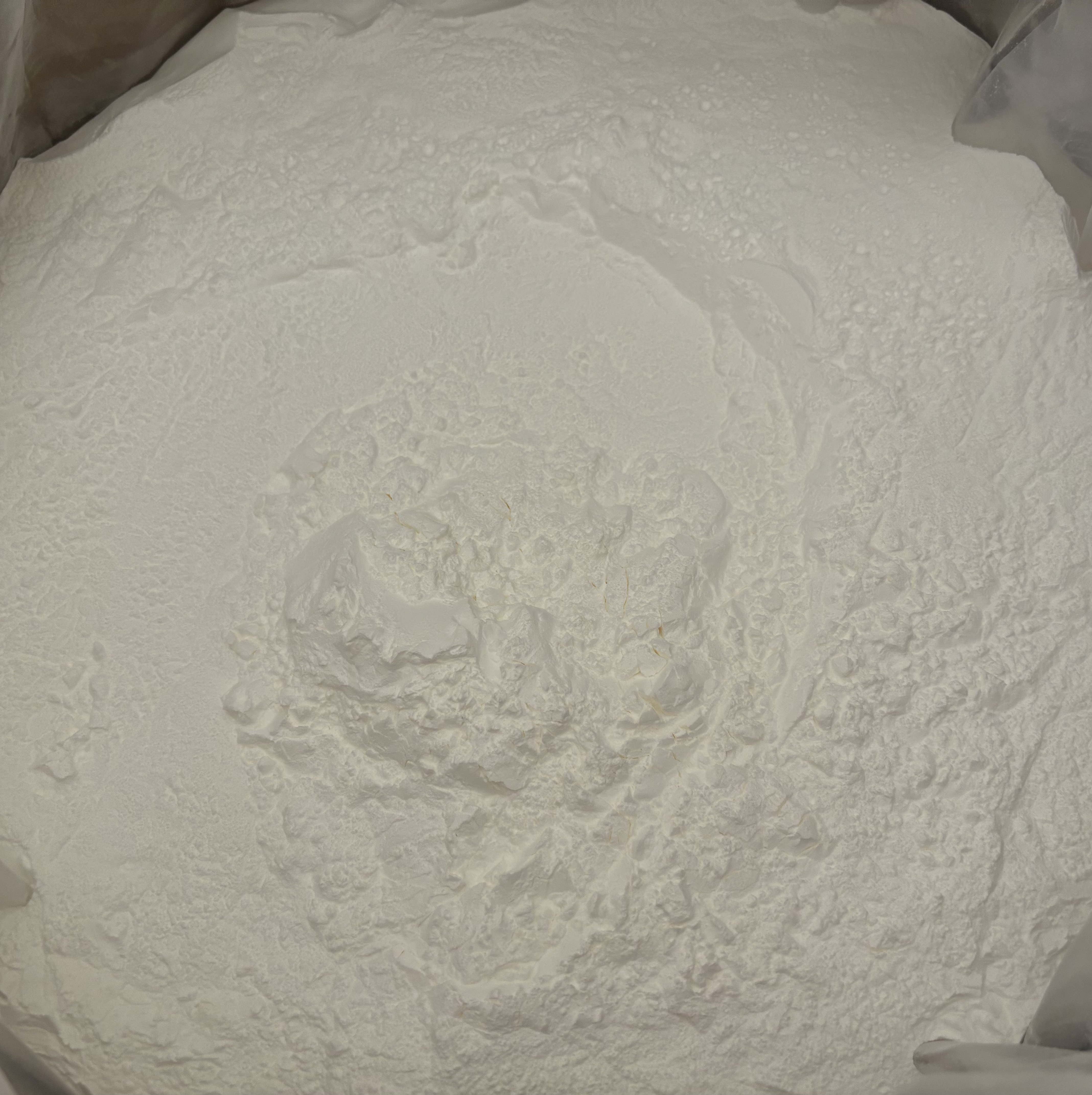
In the world of lightweight material engineering, few variables matter as much as density consistency. If you are sourcing expanded microspheres for your formulations, you already know that even minor variations in particle expansion can ripple through an entire production batch, causing defects, waste, and costly rework. Density is not merely a specification on a data sheet — it is a live performance indicator that determines how your end product behaves in the field, from automotive parts to coatings, adhesives, and beyond.
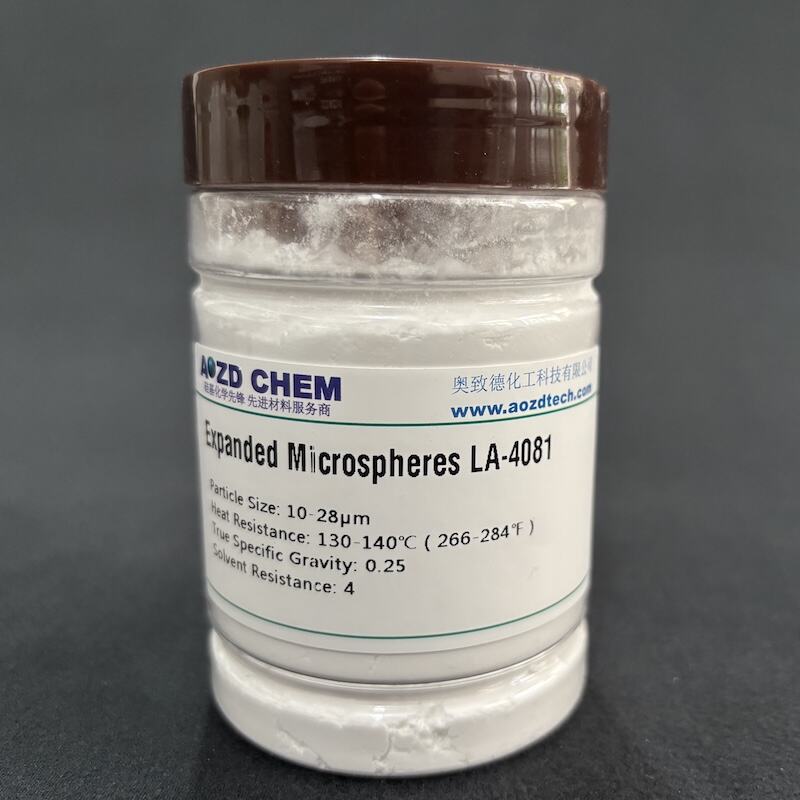
The question of whether your supplier is actually delivering consistent density in every shipment of expanded microspheres is one that many procurement and R&D teams overlook — until a problem surfaces on the production line. This article explores what density consistency means in the context of expanded microspheres, why it matters so profoundly for industrial applications, how to evaluate your supplier's capability, and what warning signs should prompt a serious conversation or a change in sourcing strategy.
Understanding Density in Expanded Microspheres
What Density Actually Represents
Expanded microspheres are thermoplastic hollow particles that have already been heat-activated to reach their final expanded state. During the expansion process, the polymer shell stretches outward and a gas is trapped inside, creating a lightweight sphere with a very specific internal void volume. The density of these spheres — typically measured in kg/m³ or g/cm³ — reflects the ratio of the shell mass to the total volume of the particle.
When density is consistent, it means that the vast majority of particles in a given batch have expanded to a predictable and uniform size and wall thickness. This uniformity directly translates into predictable performance in your formulation. When density varies batch to batch or even within a single shipment, the inconsistency introduces unknown variables into your process that are extremely difficult to compensate for without constant recalibration.
For formulators working with expanded microspheres in applications such as syntactic foams, lightweight fillers, and low-density coatings, the target density range is often very narrow. A batch that falls outside this range — even slightly — can alter the viscosity, the mechanical strength, and the final weight of the product in ways that are not immediately obvious during mixing but become apparent during quality control or even after delivery to end customers.
Why Density Uniformity Is Technically Demanding
Producing expanded microspheres with tight density control is genuinely difficult. The expansion process depends on precise thermal management, the quality and consistency of the blowing agent encapsulated within the shell, the uniformity of the polymer grade used, and the cooling and handling procedures after expansion. Any deviation in these parameters at the manufacturing level can produce a wider particle size distribution and, consequently, a wider density distribution.
Suppliers who invest in advanced process control systems and rigorous inline quality monitoring are better positioned to deliver expanded microspheres that fall within a narrow, reliable density window. Those who do not typically pass the variability problem downstream to their customers, who then absorb the cost in terms of reformulation time, scrap rates, and technical complaints.
How Density Inconsistency Impacts Your Production
The Hidden Cost of Variable Batches
When expanded microspheres arrive with density that varies from the specified range, the immediate consequence is often a mismatch between expected and actual formulation behavior. A lower-than-specified density means the spheres are more expanded than intended, which can cause the compound to be too light, too porous, or mechanically weaker than required. A higher-than-specified density means under-expansion, leading to a heavier compound, higher material costs per unit volume, and potential failure to meet weight or insulation targets.
Production teams often spend considerable time trying to compensate for these variations by adjusting mixing ratios, extending process times, or modifying formulation parameters. This reactive troubleshooting is expensive, disruptive, and — critically — it is entirely avoidable when the expanded microspheres you receive meet their density specification consistently.
In high-volume environments such as automotive component manufacturing or large-scale construction material production, a single off-spec batch of expanded microspheres can cause thousands of defective units or trigger a production line shutdown. The financial consequences are substantial, and the reputational risk with end customers can be even more damaging.
Quality Ripple Effects Down the Supply Chain
The impact of density inconsistency in expanded microspheres does not stop at the formulation stage. It propagates through every downstream step — from mixing and casting to curing, quality inspection, and final product performance. Products that have passed through a batch of off-spec expanded microspheres may exhibit unpredictable mechanical properties, altered thermal resistance, or surface defects that only become apparent after processing.
If your end product is subject to regulatory compliance or performance certification — as is common in aerospace, marine, or medical device applications — a density inconsistency in the expanded microspheres you use can invalidate test results and require full re-qualification. This is a significant burden in terms of both time and cost, and one that a reliable supplier should help you avoid entirely.
Evaluating Your Supplier's Density Control Capability
The Right Questions to Ask
To determine whether your current or prospective supplier of expanded microspheres is genuinely capable of delivering consistent density, you need to go beyond the product data sheet. Ask specifically what the density tolerance range is for each grade, and ask to see historical batch data across multiple production runs. A supplier that is confident in their process consistency will have no hesitation in sharing statistical process control data or Cpk values that demonstrate their capability.
Inquire about the testing methodology used to measure density. Common approaches include the ISO standard methods for true density measurement using gas pycnometry, as well as skeletal density testing and bulk density analysis. Understanding which method is used and how frequently testing is performed gives you insight into how seriously the supplier treats density control as a quality parameter for their expanded microspheres.
Also ask about shelf life conditions and how density may change during storage or transport. Expanded microspheres, while already in their expanded state, can be sensitive to humidity, pressure, and temperature during handling. A supplier who can advise on proper storage and who packages their expanded microspheres in a way that preserves density integrity is demonstrating a thorough understanding of the product.
Red Flags in Supplier Performance
Several warning signs should prompt you to question whether your expanded microspheres supplier is truly providing consistent density. The first is a reluctance or inability to provide lot-specific certificates of analysis that include density values. A professional supplier should routinely issue these documents and they should reflect actual measured values, not simply a reprint of the nominal specification.
Another red flag is a pattern of complaints or technical escalations that coincide with specific production periods or shipment origins. If your team notices that certain batches of expanded microspheres consistently require formulation adjustments while others do not, there is likely a batch-to-batch density variation issue at the supplier level. Tracking your internal quality data by lot number can quickly reveal this pattern.
A third warning sign is the supplier's response to quality complaints. A supplier with robust process control will engage technically and systematically, sharing root cause analysis and corrective actions. A supplier who dismisses density variation as normal or within acceptable limits without data to support that claim is not managing their process with the rigor that industrial-grade expanded microspheres require.
Building a More Resilient Sourcing Strategy
Establishing Clear Density Specifications
One of the most practical steps you can take to protect your production from density inconsistency is to move beyond general grade specifications and establish explicit density acceptance criteria in your purchasing agreement. Define the minimum and maximum density values, the acceptable testing method, and the sampling frequency for incoming inspection. When these parameters are written into the commercial agreement, both you and your expanded microspheres supplier have a shared, measurable quality standard to work toward.
This clarity also makes incoming quality control much easier. Rather than relying solely on the supplier's certificate of analysis, your team can run targeted verification tests on each lot of expanded microspheres before releasing it to production. Over time, this data builds a picture of your supplier's actual performance against the agreed specification, giving you the objective basis for supplier performance reviews.
Long-Term Supplier Partnership Considerations
Consistency in expanded microspheres density is fundamentally a process discipline issue, and process discipline is a reflection of the supplier's investment in quality systems, equipment, and technical expertise. When evaluating whether to continue with an existing supplier or qualify a new one, look beyond price per kilogram and assess the depth of technical support the supplier provides, the transparency of their quality data, and their willingness to engage in joint development or application support activities.
Suppliers who understand the end-use requirements for expanded microspheres — whether in automotive body fillers, marine syntactic foams, construction materials, or specialty coatings — are better equipped to recommend the right grade, advise on handling precautions, and proactively communicate any changes in raw material or process that might affect density. This kind of proactive partnership is far more valuable than a purely transactional relationship, especially in applications where material consistency is mission-critical.
Investing in a supplier relationship built on technical trust and shared quality objectives ultimately reduces the total cost of ownership for expanded microspheres. The savings from fewer rejected batches, reduced rework, and more stable formulation processes typically far outweigh any premium paid for a higher-grade or more rigorously controlled product.
FAQ
What is the typical density range for expanded microspheres used in industrial applications?
Expanded microspheres used in industrial applications typically have a true density ranging from approximately 20 to 80 kg/m³, depending on the grade and the degree of expansion. Fine-particle grades tend toward the higher end of this range, while larger-particle grades that are more fully expanded can reach densities as low as 20–30 kg/m³. The correct density for your application depends on your target formulation weight and the mechanical performance requirements of the final product. Always verify that the specific grade of expanded microspheres you are purchasing matches the density range validated in your formulation development.
How often should incoming batches of expanded microspheres be tested for density?
The appropriate incoming inspection frequency for expanded microspheres depends on the criticality of your application and your historical experience with the supplier. For new suppliers or newly qualified grades, testing every incoming lot is strongly recommended until you have established confidence in the supplier's consistency. For established suppliers with a proven track record, a reduced inspection frequency — such as every third or fifth lot — may be acceptable, provided that the supplier's certificate of analysis is reviewed for every shipment and any anomalies trigger immediate re-inspection.
Can density variation in expanded microspheres be corrected at the formulation stage?
Minor density variation in expanded microspheres can sometimes be partially compensated by adjusting the loading level in the formulation, but this approach has significant limitations. Increasing the loading of lower-density spheres to maintain a target weight fraction changes the particle volume fraction, which can affect viscosity, flow behavior, and mechanical properties in ways that are difficult to predict without full reformulation testing. In most cases, it is far more efficient and reliable to source expanded microspheres that consistently meet your specification than to attempt to compensate for supplier variability through formulation adjustments.
What storage conditions are important for maintaining the density of expanded microspheres?
Expanded microspheres should be stored in a cool, dry environment away from direct sunlight and sources of heat or excessive humidity. Although they are already in their expanded state, prolonged exposure to mechanical pressure or compaction — for example, from heavy stacking of bags — can cause particle damage that alters the effective bulk density of the material. Most grades of expanded microspheres should be stored at temperatures below 40°C and in sealed packaging to prevent moisture ingress. Always follow the storage guidelines provided by your expanded microspheres supplier to ensure that the density performance specified at the time of manufacture is maintained through to the point of use.
Table of Contents
- Understanding Density in Expanded Microspheres
- How Density Inconsistency Impacts Your Production
- Evaluating Your Supplier's Density Control Capability
- Building a More Resilient Sourcing Strategy
-
FAQ
- What is the typical density range for expanded microspheres used in industrial applications?
- How often should incoming batches of expanded microspheres be tested for density?
- Can density variation in expanded microspheres be corrected at the formulation stage?
- What storage conditions are important for maintaining the density of expanded microspheres?