
 EN
EN
In industrial manufacturing, material efficiency is not just a cost concern — it is a direct indicator of process intelligence. If your production line relies on expandable microspheres as a lightweight filler, foaming agent, or density-reducing additive, then how those microspheres are handled, stored, dosed, and processed has a measurable impact on your output quality and material yield. Many manufacturers are unknowingly losing a significant portion of their microsphere performance — not because the product is inferior, but because the process is not optimized for it.
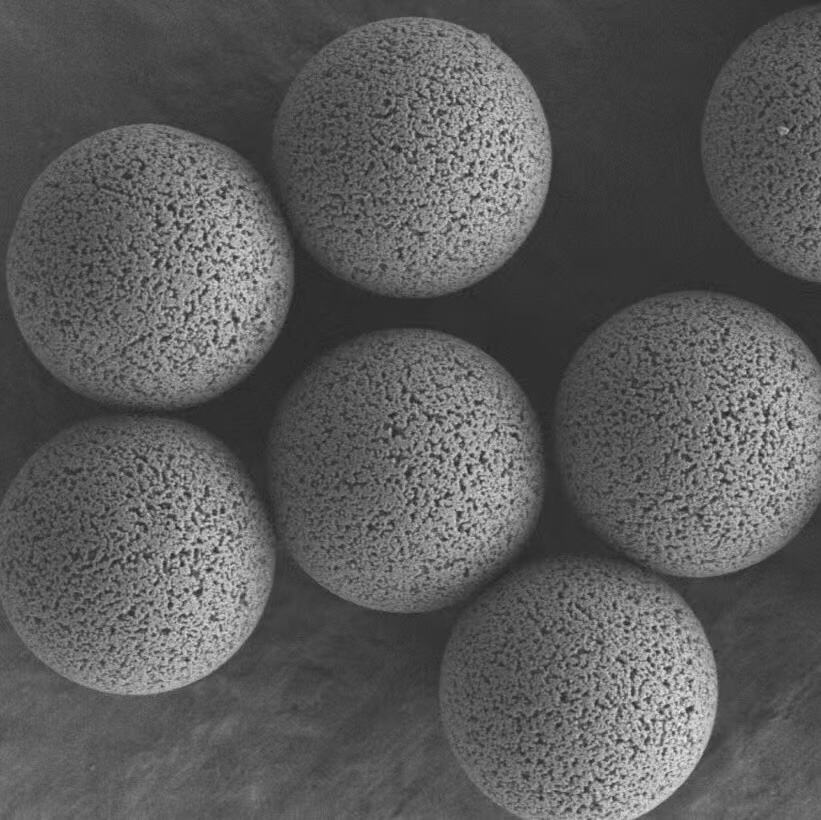
Expandable microspheres are thermoplastic polymer shells encapsulating a hydrocarbon gas. When heated, the shell softens and the gas pressure increases, causing each microsphere to expand dramatically in volume. This elegant chemistry delivers lightweight, low-density properties across coatings, adhesives, sealants, rubber compounds, plastics, and paper applications. But that same sensitivity to heat and pressure that makes expandable microspheres so useful also makes them vulnerable to premature activation, mechanical damage, and uneven distribution — all of which translate directly into wasted material and inconsistent product quality.
Understanding How Expandable Microspheres Are Wasted in Production
Premature Expansion During Processing
One of the most common and costly forms of waste occurs when expandable microspheres expand before they are supposed to. This premature activation typically happens when processing temperatures exceed the activation threshold of the microsphere grade being used. Every grade of expandable microspheres has a defined onset expansion temperature (Tstart) and maximum expansion temperature (Tmax). If your mixing, extrusion, or calendering process consistently operates at or above those thresholds, the microspheres will expand inside the equipment rather than inside the final product structure.
The consequence is a double loss. First, the functional expansion that should create a controlled low-density structure in your final product is wasted inside the machinery. Second, pre-expanded microspheres behave differently in the compound — they are more fragile, more compressible, and far more likely to collapse under mechanical shear, leaving you with a denser, non-uniform product. This mismatch between process temperature and microsphere activation range is a preventable source of waste that demands careful grade selection and process calibration.
Choosing expandable microspheres with the correct activation temperature for your specific process is therefore not a minor technical detail — it is a foundational decision that determines whether your microspheres function as intended or simply disappear into the process heat before reaching the product.
Mechanical Shear Damage During Mixing
High-shear mixing is another major pathway through which expandable microspheres are destroyed before they can contribute their intended function. The thin polymer shells that give expandable microspheres their expansion capability are also inherently fragile under mechanical stress. Aggressive rotor speeds, tight clearances in mixers, and prolonged mixing cycles all generate shear forces that physically rupture the microsphere shells, releasing the encapsulated gas and leaving behind inert polymer fragments that contribute neither low density nor any other performance attribute.
The damage is often invisible at the mixing stage. Your compound may appear well-blended and uniform, while in reality a significant fraction of the expandable microspheres have already been compromised. The problem only becomes visible when the finished product shows unexpected density variations, surface defects, or failed lightweight targets — at which point the waste has already occurred and cannot be recovered.
Optimizing shear conditions when working with expandable microspheres requires a review of rotor tip speed, mixing sequence, and the order in which ingredients are introduced. In many cases, adding expandable microspheres at a late stage in the mixing cycle — after the base compound has been well-blended — significantly reduces shear exposure and improves microsphere survival rate.
Storage and Handling Errors That Reduce Microsphere Yield
Temperature and Humidity Exposure During Storage
Expandable microspheres are sensitive materials that require controlled storage conditions. When stored at elevated ambient temperatures — particularly in warehouses or production areas that experience seasonal heat — partial expansion can occur in the bag or container before the material even reaches the production floor. Even modest temperature excursions of 10–15°C above recommended storage conditions can begin to compromise the expansion potential of expandable microspheres, reducing the available density reduction in your final application.
Humidity exposure can also degrade the flowability and dispersibility of expandable microspheres. Clumping and agglomeration caused by moisture uptake make accurate dosing more difficult and can result in uneven distribution within the compound. When microspheres are not evenly distributed, some zones of the product will have excess microsphere concentration while others will be deficient — producing density inconsistencies that undermine product quality and increase rejection rates.
Implementing proper storage protocols — including sealed containers, temperature-controlled environments, and FIFO (first in, first out) inventory management — protects the quality of expandable microspheres and ensures that the material you process performs as the supplier's technical data sheet specifies.
Incorrect Dosing and Measurement Practices
Because expandable microspheres are low-bulk-density materials, small errors in volumetric or weight-based dosing can have a disproportionate effect on final product performance. Over-dosing wastes expensive material and can cause surface defects, structural weakness, or excessive void content. Under-dosing fails to achieve the intended weight reduction or functional target, potentially requiring a second processing pass that further stresses the microspheres.
Manual scooping or gravity-fed dosing systems are particularly prone to inconsistency when handling expandable microspheres due to their low density and tendency to aerate and settle differently between batches. Gravimetric dosing systems calibrated specifically for the bulk density of your expandable microsphere grade offer significantly better batch-to-batch consistency and reduce material waste through precision control.
Process Parameters That Silently Erode Microsphere Performance
Pressure Conditions in Closed Mold and Extrusion Processes
Expandable microspheres expand because internal gas pressure overcomes the resistance of the softened shell. In a closed mold or pressurized extrusion process, external pressure can counteract this expansion mechanism. If the mold clamp pressure, injection pressure, or back pressure in extrusion is too high relative to the activation characteristics of the expandable microspheres being used, expansion will be suppressed and the material will behave like an inert filler rather than an active lightweight agent.
This pressure-related waste is particularly common when manufacturers switch between product grades or processing equipment without recalibrating process parameters. A formulation that worked well with one extruder or mold tool may underperform significantly with different back-pressure settings or mold clamping forces. Systematic pressure optimization trials, conducted specifically for each grade of expandable microspheres, are necessary to unlock full expansion performance.
Residence Time and Thermal Profile Management
The thermal history experienced by expandable microspheres during processing matters as much as the peak temperature. An extended residence time at elevated temperature — even below the theoretical Tmax — can cause significant over-expansion followed by shell collapse, producing a product with collapsed voids rather than intact expanded spheres. Collapsed spheres do not contribute to density reduction and may actually degrade mechanical properties by introducing discontinuities in the material matrix.
Mapping the temperature profile through your process — from the point of introduction to the point of cooling — helps identify zones where expandable microspheres are exposed to damaging thermal conditions. Adjusting screw speed in extrusion, reducing hot zone length, or changing the point of microsphere addition in the process sequence can all shorten effective thermal exposure and preserve more of the microsphere's expansion potential for the final product.
Process engineers who treat expandable microspheres as thermally passive ingredients invariably find that their material efficiency is lower than it could be. Treating them as thermally active, sensitive additives — with defined activation windows that must be respected — is the mindset shift that drives genuine efficiency improvement.
Signs That Your Process Is Wasting Expandable Microspheres
Density and Weight Inconsistency Across Batches
The most direct indicator that expandable microspheres are being wasted is batch-to-batch variation in product density or weight. If your lightweight compound or coated substrate shows inconsistent density despite consistent formulation inputs, the microspheres are almost certainly performing differently from batch to batch due to process variability. This could reflect temperature fluctuations, inconsistent mixing intensity, or varying residence times — all of which are correctable process problems rather than inherent material limitations.
Tracking product density as a primary quality control metric — and correlating density deviations with specific process variables — creates a feedback loop that surfaces microsphere waste problems before they become systemic. Many manufacturers find that introducing density monitoring as a routine QC step reveals process inefficiencies that were previously invisible and accepted as normal variability.
Higher-Than-Expected Material Consumption
If you find that your actual consumption of expandable microspheres per unit of finished product consistently exceeds your theoretical formulation target, this is a strong signal that a portion of the microsphere content is not performing its intended function. The gap between theoretical and actual microsphere consumption — once accounting for normal process variation — represents direct material waste and increased formulation cost per unit.
Conducting a systematic mass balance across your process, tracking expandable microsphere input against measurable density reduction output, allows you to quantify the efficiency gap and justify the engineering investment needed to close it. Even a 10–15% improvement in microsphere utilization efficiency can represent meaningful cost savings when scaled across high-volume production.
FAQ
What is the main reason expandable microspheres underperform in a production process?
The most common reasons include using a microsphere grade with an activation temperature that is too close to (or within) the process operating temperature, applying excessive mechanical shear during mixing, or exposing the material to elevated storage temperatures prior to processing. Each of these factors can cause premature or incomplete expansion, reducing the material's contribution to density reduction and increasing per-unit material cost.
How should expandable microspheres be stored to prevent quality loss?
Expandable microspheres should be stored in sealed, moisture-resistant containers in a cool, dry environment away from direct sunlight and heat sources. Recommended storage temperatures typically range from 5°C to 25°C depending on the specific grade. FIFO inventory rotation helps ensure that older stock is processed before newer material, preventing quality degradation from extended storage.
At what stage of mixing should expandable microspheres be added?
In most applications, expandable microspheres should be introduced as late as possible in the mixing sequence — after the base compound or matrix material has been thoroughly blended and the mixing temperature has been reduced. Late addition minimizes the thermal and mechanical shear exposure of the microspheres, significantly improving shell survival rate and final product density uniformity.
How can I tell if my current process is wasting expandable microspheres?
Key indicators include higher-than-expected product density relative to formulation targets, batch-to-batch density variation despite consistent inputs, higher-than-theoretical material consumption per unit of output, and visible surface defects or void irregularities in finished products. Establishing a systematic mass balance between microsphere input and density reduction output is the most reliable method for quantifying process efficiency and identifying waste.