
 EN
EN
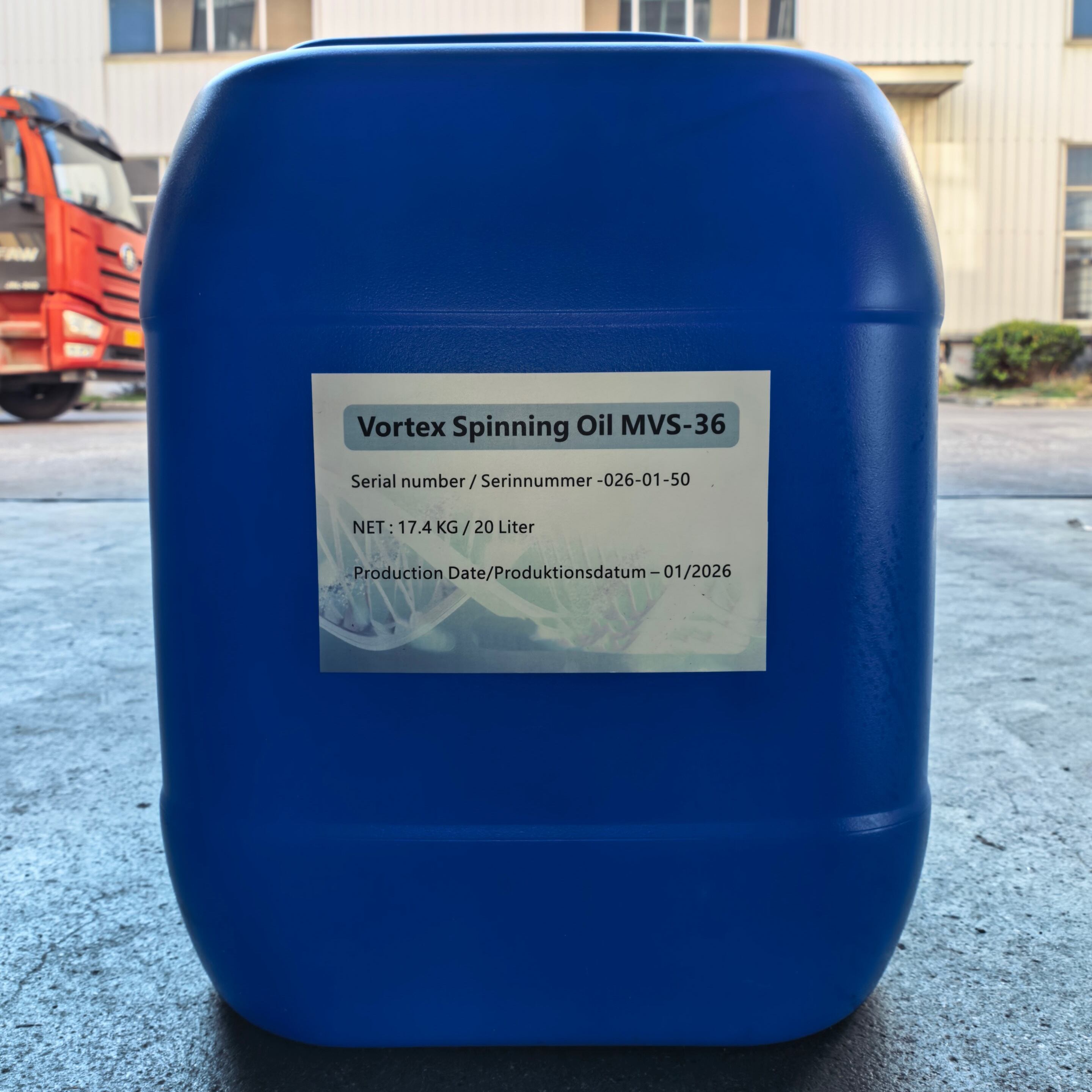
Static electricity in synthetic fiber processing is not merely an inconvenience — it is a production-line liability. When fibers cling together, repel guides, or attract dust and contaminants, the downstream effects ripple through yarn quality, machine efficiency, and even worker safety. At the heart of this problem lies a deceptively simple question: can the right spinning oil actually reduce static in synthetic fibers? The short answer is yes, but the conditions, chemistry, and selection criteria behind that answer deserve a careful and practical examination.
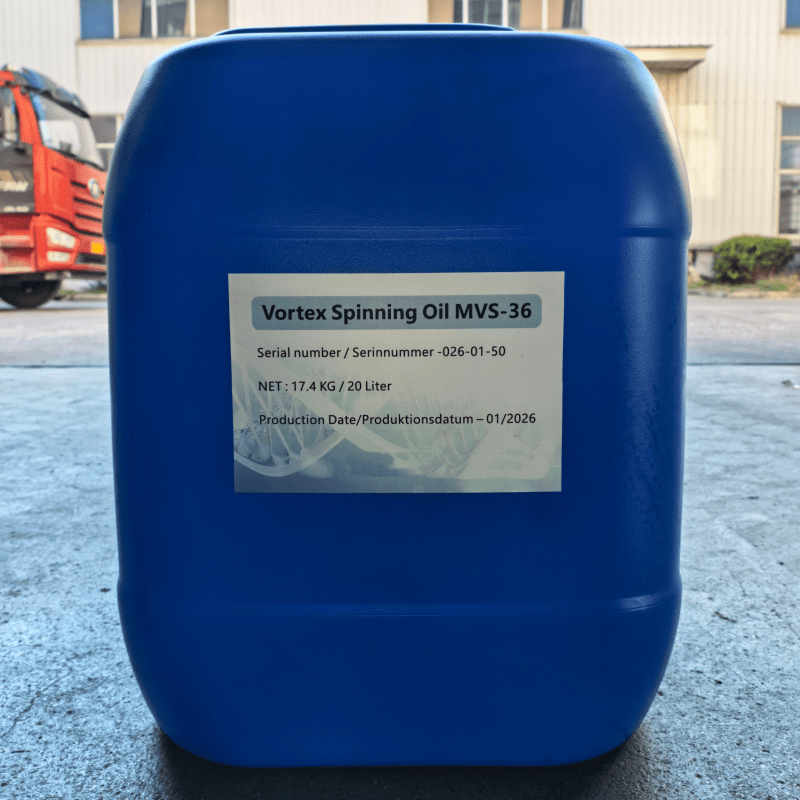
Synthetic fibers — including polyester, nylon, acrylic, and polypropylene — are inherently poor conductors of electricity. Unlike natural fibers, which carry ambient moisture that assists in charge dissipation, synthetic substrates accumulate triboelectric charge rapidly during high-speed spinning, drawing, and winding operations. A well-formulated spinning oil can serve as a frontline solution to this challenge by introducing antistatic agents, lubricity components, and moisture-retaining chemistry directly onto the fiber surface. This article examines the mechanisms at work, the conditions under which a spinning oil performs optimally, and the factors processors must weigh when selecting the right formulation.
Understanding Static Build-Up in Synthetic Fiber Processing
Why Synthetic Fibers Are Prone to Electrostatic Charge
The electrical behavior of a fiber is largely governed by its surface chemistry and moisture regain. Natural fibers like cotton and wool absorb ambient humidity, allowing charge to leak away continuously. Synthetic polymers, by contrast, are hydrophobic at the molecular level, meaning they resist moisture absorption and therefore lack a natural channel for charge dissipation. During mechanical contact — between the fiber and metallic guides, rollers, or adjacent fibers — electrons are transferred and accumulate rapidly, creating static fields strong enough to disrupt yarn formation.
The triboelectric effect is especially pronounced at high processing speeds. Modern vortex and air-jet spinning technologies operate at fiber velocities that generate significantly more frictional contact per unit of time than conventional ring spinning. This means that any inadequacy in the antistatic protection provided by the spinning oil becomes immediately visible as yarn breaks, fiber fly, and uneven winding tension. Understanding this physical reality is the first step toward selecting a chemistry that genuinely addresses it.
The type of synthetic fiber also matters. Polyester, for example, sits near the positive end of the triboelectric series, while nylon tends toward the negative end. When both fiber types are processed in the same facility, cross-contamination of charge can create compounding static problems. A spinning oil that addresses the specific triboelectric behavior of the primary fiber type will outperform a generic formulation in these situations.
How Static Manifests as Process and Quality Problems
Static build-up in synthetic fiber processing expresses itself in several operationally damaging ways. The most visible symptom is fiber separation or ballooning — individual filaments repel each other due to like-charge accumulation, causing yarn to lose compactness and evenness. This directly degrades tensile strength and downstream performance in weaving or knitting operations.
Beyond yarn structure, static attracts airborne particulates, lint, and short fiber fragments onto the yarn surface and machine components. This contamination increases maintenance frequency, reduces guide longevity, and introduces defects into finished fabric. In clean-room or medical-grade fiber production, static-induced contamination can compromise product qualification entirely. A properly applied spinning oil reduces the surface charge density that drives these phenomena, effectively acting as a chemical shield between the fiber and its electrostatic environment.
The Chemistry Behind Antistatic Spinning Oil Formulations
Antistatic Agents and Their Role in Charge Dissipation
The antistatic performance of a spinning oil is primarily determined by the class and concentration of antistatic agents in its formulation. These agents work through one of two mechanisms: ionic or non-ionic pathways. Ionic antistatic agents — typically quaternary ammonium compounds, ethoxylated amines, or sulfonate salts — form a thin conductive layer on the fiber surface by attracting atmospheric moisture and creating an ionic pathway for charge to dissipate. Non-ionic agents achieve a similar effect through hygroscopic chemistry without introducing ionic species that might affect downstream dyeing or finishing processes.
The selection between ionic and non-ionic antistatic chemistry in a spinning oil depends on the end-use requirements of the fiber. For white or bright synthetic yarns destined for demanding dyeing processes, non-ionic formulations are generally preferred because they leave fewer ionic residues that could cause uneven dye uptake. For technical fibers where electrical dissipation is the paramount concern, ionic agents often deliver superior performance, especially at lower relative humidity conditions where non-ionic agents lose effectiveness.
Concentration matters as much as chemistry. An antistatic agent present at insufficient levels cannot form a continuous surface layer and will fail to provide consistent charge dissipation. Conversely, excessive concentrations can create sticky deposits on machine components, increase processing tension, and introduce fiber cohesion problems. The art of formulating an effective antistatic spinning oil lies in achieving the optimal balance between antistatic efficiency and processability.
Lubricity, Cohesion, and Their Relationship to Static Control
Antistatic performance in a spinning oil cannot be viewed in isolation from its lubrication and cohesion functions. Friction between fiber and machine surfaces is the mechanical origin of triboelectric charge. A formulation with superior lubricity reduces the severity of this friction, meaning less charge is generated in the first place. This dual-action approach — reducing charge generation through lubrication and accelerating charge dissipation through antistatic chemistry — is what distinguishes a high-performance spinning oil from a basic functional lubricant.
Fiber-to-fiber cohesion is equally important. Synthetic filaments that are tightly cohesive within the yarn bundle share charge more evenly across a larger surface area, reducing peak static accumulation at any single point. A spinning oil that promotes appropriate cohesion without excessive stickiness creates a yarn structure that is inherently more resistant to the kind of localized charge build-up that causes yarn breaks and snarling. This is particularly relevant in vortex spinning, where the rotational air flow creates intense fiber-to-fiber contact dynamics that amplify static effects.
Application Conditions That Determine Antistatic Effectiveness
Humidity, Temperature, and Environmental Factors
Even the best-formulated spinning oil operates within an environmental context that significantly influences its antistatic effectiveness. Relative humidity is perhaps the most influential external variable. Ionic antistatic agents function by forming a moisture-dependent conductive film on the fiber surface. In environments where humidity drops below 40–45%, this film becomes discontinuous, and antistatic protection degrades accordingly. Processing facilities in arid climates or heavily air-conditioned production floors may find that a spinning oil which performs well in humid conditions falls short in dry seasons without supplemental humidification.
Temperature also affects the viscosity and distribution behavior of the spinning oil on the fiber surface. At lower temperatures, higher-viscosity formulations may not spread uniformly, leaving areas of the fiber inadequately coated and vulnerable to charge accumulation. At elevated temperatures, some antistatic agents can volatilize or migrate away from the fiber surface, reducing their effectiveness precisely at the point in the process where friction — and therefore charge generation — is highest. Selecting a spinning oil formulated for the actual temperature range of the spinning operation is essential.
Application Rate, Uniformity, and Process Integration
The antistatic performance of any spinning oil is only as good as its application consistency. Uneven distribution — whether caused by inconsistent metering systems, clogged applicator rollers, or fiber surface irregularities — leads to zones of inadequate coverage where static can accumulate freely. Production facilities that have invested in a premium spinning oil but continue to see static-related defects should first audit their oil application system before concluding that the formulation is at fault.
Application rate, typically expressed as a percentage of oil on fiber (OOF), must be calibrated to the specific fiber type, processing speed, and end-use requirements. For vortex spinning of synthetic fibers, OOF rates in the range of 0.3% to 0.8% are common, but the optimal value varies with fiber denier, yarn count, and machine geometry. A spinning oil supplier with strong technical support capability can provide application rate guidance based on actual process data, which is considerably more reliable than relying on generic product specification sheets alone.
Selecting the Right Spinning Oil for Static Reduction in Synthetic Fibers
Key Selection Criteria for Antistatic Performance
When evaluating a spinning oil specifically for its antistatic capabilities in synthetic fiber processing, several criteria should guide the selection process. The first is the formulation's antistatic agent type and its performance profile across the relevant humidity range of the production facility. Products that maintain effective static dissipation even at moderate-to-low humidity provide a wider operational safety margin. For vortex spinning operations specifically, the spinning oil must be capable of performing consistently under the high-turbulence air conditions that characterize this technology.
The second criterion is compatibility with downstream processing. Many synthetic yarns receive dyeing, finishing, or coating treatments after spinning, and residues from the spinning oil must not interfere with these processes. Evaluating a spinning oil candidate in the context of the full processing chain — not just its spinning performance — prevents costly surprises in dyeing or finishing. A formulation that causes static-related problems in the spinning room may be solving one problem while creating another in the dyeing bath if its chemistry is not compatible.
Performance Testing and Qualification of Spinning Oil Candidates
Selecting a spinning oil for antistatic performance should involve both bench-scale testing and production-floor validation. Bench-scale methods such as surface resistivity measurement and charge decay testing provide a rapid initial screen of different formulations under controlled conditions. These tests measure how quickly a charge applied to a treated fiber surface dissipates — a direct indicator of antistatic effectiveness. Formulations that show charge decay times under two seconds at standard test conditions are generally considered acceptable for high-speed synthetic fiber processing.
Production-floor validation takes this further by measuring real-world outcomes: yarn break rates, static-related machine stops, hairiness index, and evenness data across a full production run. These metrics capture the interaction between the spinning oil and the specific machine geometry, fiber type, and processing conditions of the actual facility. Only by closing the loop between bench testing and production validation can a processor be confident that a new spinning oil will deliver sustained antistatic performance at commercial scale.
It is also advisable to conduct seasonal testing, particularly in facilities located in regions with significant humidity variation between summer and winter. A spinning oil that qualifies in summer humidity conditions may require formulation adjustment or supplemental humidification to maintain its antistatic performance in winter. Building this seasonal dimension into the qualification process prevents unexpected quality deterioration when environmental conditions shift.
FAQ
Does all spinning oil provide antistatic protection for synthetic fibers?
No. Not all spinning oil formulations contain dedicated antistatic agents. Some products are formulated primarily for lubrication or cohesion, with only incidental antistatic properties. Processors working with synthetic fibers that are prone to static build-up should specifically seek formulations that explicitly include antistatic chemistry and have been validated for the relevant fiber type and processing technology. Relying on a generic lubricating spinning oil without confirmed antistatic functionality is a common source of persistent static problems in synthetic fiber operations.
Can increasing the spinning oil application rate resolve persistent static issues?
Increasing application rate can help in some cases, particularly if the current OOF is below the effective threshold for the formulation in use. However, excessive application rates introduce their own problems, including deposit build-up on machine components, increased processing tension, and adverse effects on downstream finishing. The more effective approach is to first evaluate whether the current spinning oil formulation is genuinely suited for antistatic performance on the specific synthetic fiber being processed, and then optimize application rate within the recommended range for that formulation.
How does relative humidity affect the antistatic performance of spinning oil?
Relative humidity has a direct and significant effect on the antistatic performance of most spinning oil formulations, particularly those using ionic antistatic agents. These agents depend on atmospheric moisture to form the conductive surface layer that facilitates charge dissipation. In low-humidity environments — typically below 40% RH — this layer becomes incomplete and antistatic protection degrades. Processors operating in dry conditions should either select a spinning oil formulated with humidity-independent antistatic chemistry or implement supplemental humidification in the spinning area to support the oil's antistatic function.
Is antistatic spinning oil suitable for all types of synthetic fibers?
Most antistatic spinning oil formulations are engineered for specific fiber chemistries, processing technologies, or performance profiles. A product optimized for polyester in ring spinning may not deliver equivalent antistatic performance on nylon in vortex spinning. Fiber denier, processing speed, machine type, and end-use requirements all influence which spinning oil formulation is most appropriate. Processors should consult with their oil supplier and request formulation-specific technical data for their exact application rather than assuming broad compatibility across synthetic fiber types.
Table of Contents
- Understanding Static Build-Up in Synthetic Fiber Processing
- The Chemistry Behind Antistatic Spinning Oil Formulations
- Application Conditions That Determine Antistatic Effectiveness
- Selecting the Right Spinning Oil for Static Reduction in Synthetic Fibers
-
FAQ
- Does all spinning oil provide antistatic protection for synthetic fibers?
- Can increasing the spinning oil application rate resolve persistent static issues?
- How does relative humidity affect the antistatic performance of spinning oil?
- Is antistatic spinning oil suitable for all types of synthetic fibers?