 EN
EN
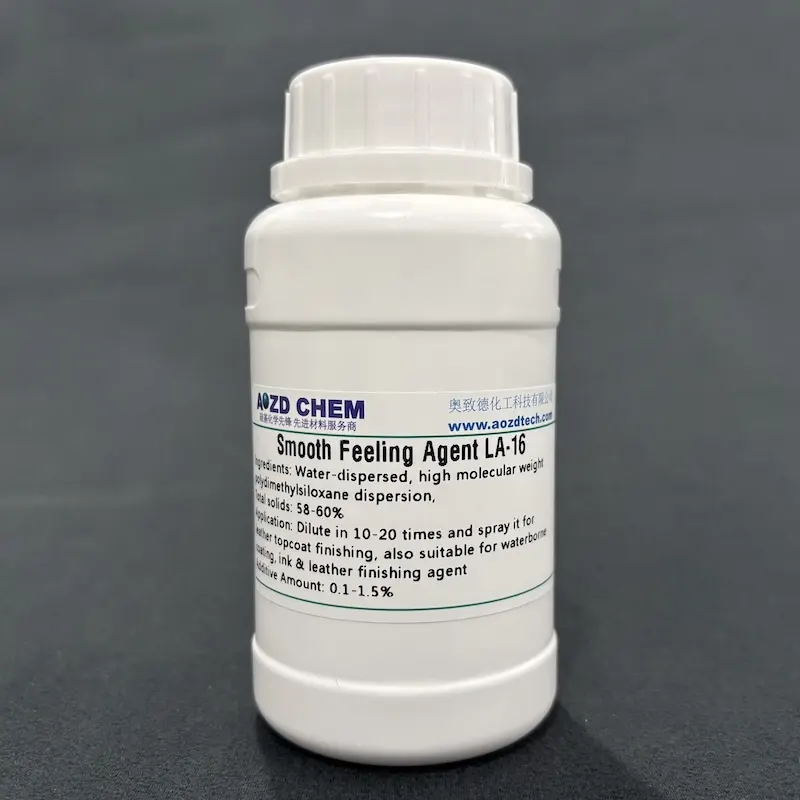
When it comes to premium upholstery, the difference between a sofa that ages gracefully and one that deteriorates within months often comes down to an invisible layer — the finish. leather finishing chemicals are the backbone of this final treatment stage, determining how leather looks, feels, and performs over its entire lifespan. Without the right finishing system, even the finest full-grain hides can crack, fade, or lose their tactile appeal under everyday use conditions.
For manufacturers, furniture brands, and automotive interior specialists targeting the premium segment, leather finishing chemicals are not optional extras — they are core engineering tools. They define surface texture, build color depth, control sheen levels, and reinforce resistance against abrasion, moisture, and UV exposure. Understanding why these chemicals are so vital requires a deeper look at what happens on the surface of leather during and after the finishing process.
The Role of Leather Finishing in Defining Premium Quality
What Finishing Actually Does to a Leather Surface
Finishing is the final stage in leather production, applied after tanning and dyeing. During this phase, leather finishing chemicals are layered onto the hide to seal the surface, refine the color, and build up functional protective properties. The chemistry involved is precise — formulators must balance adhesion, flexibility, and surface hardness to achieve a result that meets premium product specifications.
For upholstery applications, this means the finishing layer must flex repeatedly without cracking. When a person sits down or stands up, the leather surface stretches and compresses thousands of times over its lifetime. Leather finishing chemicals with the right polyurethane or acrylic binder chemistry ensure the coating moves with the substrate rather than fracturing away from it.
Beyond physical flexibility, the finish must also achieve a specific hand feel. Premium upholstery demands a surface that feels soft, smooth, or subtly textured depending on the design intent. Feeling agents and matting agents within leather finishing chemical systems give formulators precise control over these tactile outcomes, making them indispensable for high-end product development.
How Surface Chemistry Translates to Perceived Luxury
Luxury is as much about perception as it is about material quality. When a consumer touches premium upholstery leather, they are actually touching the finish — a formulated layer of leather finishing chemicals — not the raw hide itself. This means the entire tactile experience of premium leather furniture or automotive seating is engineered through chemistry.
Gloss levels are carefully calibrated using matting agents and high-solids top coats. A semi-matte finish, for example, reads as more sophisticated than a high-gloss one in many premium interiors. Leather finishing chemicals allow manufacturers to hit precise gloss readings consistently across large production batches, which is critical for maintaining brand standards and reducing quality variation.
Color uniformity is another dimension where these chemicals prove vital. Pigment dispersions and fixatives within leather finishing chemical systems lock in color and prevent uneven fading, even under prolonged light exposure. For premium upholstery, where a sofa may be positioned near a window for years, this UV resistance built into the finishing chemistry is what preserves the product's visual integrity over time.

Performance Properties Enabled by Leather Finishing Chemicals
Abrasion and Wear Resistance in High-Use Applications
Premium upholstery leather must endure intensive use without showing premature wear. Sofas in commercial settings, automotive seats, and hospitality furniture face thousands of seating cycles, rubbing, and surface contact every year. Leather finishing chemicals engineered with high cross-link density create a surface layer that resists this mechanical stress effectively.
Cross-linking agents within the finishing system react with binder molecules to form a tighter, harder network at the surface. This increases the Martindale rub score — a standard test for surface durability — and ensures the finish remains intact across the expected service life of the product. Without this chemistry, even a visually perfect piece of upholstery leather would fail under real-world use conditions.
Scratch resistance is similarly governed by the top coat chemistry. Leather finishing chemicals formulated with wax emulsions, silicone-based additives, or specific polymer blends reduce the coefficient of friction at the leather surface. This means sharp objects, belt buckles, or everyday contact are less likely to leave visible marks, preserving the premium appearance of the upholstery for longer.
Moisture and Stain Resistance as a Consumer Expectation
Premium buyers have a reasonable expectation that their leather upholstery will resist spills and moisture ingress. Leather is a naturally porous material, and without an effective finishing system, liquids would penetrate quickly, causing staining, swelling, or microbial growth in the substrate. Leather finishing chemicals address this by creating a semi-permeable or fully hydrophobic barrier depending on the application intent.
Water-repellent surface chemistries used in premium finishing systems allow moisture to bead and roll off the surface without penetrating the hide. These systems typically involve fluorinated compounds or silicone-modified polymers as part of the broader leather finishing chemical formulation. The result is a leather surface that maintains its appearance and structural integrity even when exposed to liquid contact.
Stain resistance extends beyond water to include oils, grease, and common household contaminants. Finishing chemists design leather finishing chemicals to be oleophobic as well as hydrophobic in applications where premium furniture might encounter food contact or cosmetic products. This multi-axis protection is what allows brands to confidently promote their leather upholstery products with meaningful durability claims.
Why the Finishing Stage Cannot Be Simplified or Skipped
The Cumulative Impact of Finishing Chemistry on Product Value
Some manufacturers may consider reducing investment in leather finishing chemicals to manage cost pressures. This is a significant strategic error for any brand positioned in the premium segment. The finishing stage is where raw hide is transformed into a value-added product. Without it, the leather may look acceptable initially but will fail to meet consumer expectations for durability and aesthetics within months of use.
The value that leather finishing chemicals add is cumulative. Each layer — from the base coat that seals the surface, through the color coat that builds depth, to the top coat that provides protection — contributes a specific functional and aesthetic property. Removing or cheapening any layer in this system degrades the overall performance profile of the finished leather. For premium upholstery, this translates directly into product returns, brand damage, and lost market positioning.
Premium brands invest in leather finishing chemicals precisely because the return on that investment is visible, measurable, and commercially significant. A well-finished hide commands higher retail prices, supports stronger warranties, and generates better consumer reviews. The chemistry is not merely a processing cost — it is a value creation mechanism embedded in the product itself.
Regulatory and Sustainability Requirements Shaping Modern Finishing Chemistry
The landscape for leather finishing chemicals is also shaped by evolving regulatory standards and sustainability expectations. Many premium furniture and automotive brands now require their leather suppliers to use finishing systems that comply with REACH, ZDHC, or other chemical safety frameworks. This means the selection of leather finishing chemicals is not only a technical decision but also a compliance obligation.
Water-based leather finishing chemicals have largely replaced solvent-based systems in premium applications, driven by VOC emission regulations and workplace safety requirements. Modern aqueous finishing systems deliver equivalent or superior performance to their solvent-based predecessors while meeting environmental standards. Manufacturers who invest in these advanced leather finishing chemical systems also benefit from cleaner production environments and reduced regulatory risk.
Sustainability certification requirements, such as those associated with Bluesign or Leather Working Group audits, include assessments of the chemical inputs used in finishing. Premium brands are increasingly auditing their leather supply chains at the chemical input level, meaning that the choice of leather finishing chemicals now carries supply chain implications for brands positioning themselves as responsible luxury producers.
Application Precision and the Expertise Behind Premium Finishing
Why Formulation Expertise Matters at the Industrial Scale
Applying leather finishing chemicals at industrial scale requires both technical expertise and precise process control. Variables such as application viscosity, dry film thickness, drying temperature, and inter-coat adhesion must all be managed within tight tolerances to achieve consistent results. A premium upholstery leather manufacturer running high-volume production cannot afford color or gloss variation between batches — the finishing chemistry must be both effective and reproducible.
Formulation expertise in leather finishing chemicals includes understanding how different substrates respond to specific chemistries. A corrected-grain leather absorbs finishing chemicals differently than a full-grain hide, and a nubuck surface requires a lighter, more penetrating system than a smooth aniline leather. Experts who understand these interactions can customize finishing systems that maximize performance across varied hide types, which is critical for upholstery manufacturers sourcing from multiple tannery partners.
The interaction between leather finishing chemicals and mechanical application equipment — spray lines, roller coaters, plate embossing — also demands chemical knowledge. Viscosity modifiers, flow agents, and leveling additives within finishing formulations ensure that chemicals spread evenly under production conditions and do not create defects such as orange peel, cracking, or uneven sheen. This level of formulation sophistication is what separates industrial-grade finishing chemistry from commodity products.
Innovation Trends Driving the Future of Leather Finishing Chemistry
The field of leather finishing chemicals continues to evolve rapidly. Bio-based binder systems derived from renewable raw materials are gaining traction in premium applications where brands wish to reduce their petrochemical dependency. These systems offer competitive performance while supporting sustainability narratives that are increasingly important in premium furniture and automotive marketing.
Functional finishes are another innovation frontier. Self-healing coatings that use microencapsulated agents to repair minor scratches autonomously are being developed for high-end automotive leather applications. Antimicrobial finishing systems that inhibit bacterial and fungal growth are gaining interest in healthcare furniture and hospitality upholstery. These advanced leather finishing chemicals represent a convergence of material science and performance engineering that adds measurable value to premium products.
Digital color matching technology, combined with precisely formulated leather finishing chemicals, now allows manufacturers to achieve brand-critical color standards with unprecedented accuracy. Spectrophotometric measurement tools and software-linked pigment dispensing systems work in concert with finishing chemistry to produce upholstery leather that meets tight color tolerances across global production facilities. This integration of chemistry and digital process control is the new standard in premium leather finishing.
FAQ
What makes leather finishing chemicals different from standard coatings?
Leather finishing chemicals are specifically engineered to bond with and flex alongside the hide substrate. Unlike rigid industrial coatings, these systems must accommodate the natural movement and stretch of leather without delaminating or cracking. They also balance multiple performance requirements simultaneously — color, gloss, adhesion, durability, and hand feel — within a very thin applied film, which demands highly specialized formulation chemistry.
How do leather finishing chemicals affect the lifespan of upholstery leather?
A well-applied leather finishing chemical system significantly extends the functional lifespan of upholstery leather. By protecting the hide from abrasion, moisture, UV radiation, and chemical contamination, the finish delays the onset of cracking, fading, and surface wear. Premium finishing chemistry can extend the service life of upholstery leather by years compared to poorly finished or unfinished hide, directly impacting the total cost of ownership for the end consumer.
Are water-based leather finishing chemicals suitable for high-performance upholstery?
Yes, modern water-based leather finishing chemicals are fully capable of meeting the performance requirements of premium upholstery applications. Advances in polymer dispersion technology and cross-linking chemistry have brought water-based systems to performance parity with solvent-based alternatives in most abrasion, flex, and adhesion tests. They also offer significant advantages in terms of VOC emissions, regulatory compliance, and worker safety, making them the preferred choice for premium and sustainably positioned brands.
How important is selecting the right supplier for leather finishing chemicals?
Selecting a technically capable supplier for leather finishing chemicals is critically important for premium upholstery manufacturers. The supplier must offer not just compliant and effective products, but also formulation support, batch consistency, and knowledge of regulatory requirements. Since finishing chemistry directly determines the final quality of the upholstery leather, partnering with suppliers who understand the full production context — from substrate variability to end-use performance standards — is a key strategic decision for any manufacturer targeting the premium market.
Table of Contents
- The Role of Leather Finishing in Defining Premium Quality
- Performance Properties Enabled by Leather Finishing Chemicals
- Why the Finishing Stage Cannot Be Simplified or Skipped
- Application Precision and the Expertise Behind Premium Finishing
-
FAQ
- What makes leather finishing chemicals different from standard coatings?
- How do leather finishing chemicals affect the lifespan of upholstery leather?
- Are water-based leather finishing chemicals suitable for high-performance upholstery?
- How important is selecting the right supplier for leather finishing chemicals?