
 EN
EN
Uneven void distribution in foam materials represents one of the most persistent challenges in cellular manufacturing. When blowing agents fail to create uniform cell structures, the resulting material exhibits inconsistent density, reduced mechanical properties, and poor performance across applications. Understanding why blowing agents cause uneven void distribution is essential for engineers, material scientists, and manufacturing professionals seeking to optimize foam production and achieve reliable product quality.
The performance of blowing agents directly influences how gas bubbles nucleate, expand, and stabilize within the polymer matrix. Several interconnected factors determine whether blowing agents deliver uniform void distribution or create problematic cellular irregularities. Recognizing these root causes allows manufacturers to implement targeted corrections and achieve the consistent foam structures their applications demand.
How Blowing Agents Interact with Matrix Properties
Gas Solubility and Nucleation Dynamics
Blowing agents must dissolve into the polymer matrix before foam formation can begin. The solubility of blowing agents varies significantly based on polymer type, temperature, and pressure conditions. When blowing agents encounter regions of the polymer with different thermal or chemical properties, nucleation occurs unevenly. Some zones may exhibit rapid bubble formation while adjacent areas remain relatively dense, creating the characteristic uneven void distribution that compromises final product performance.
Temperature gradients within the processing equipment strongly influence how blowing agents distribute their nucleation energy. If the polymer melt temperature varies from one section to another, the dissolved blowing agents will preferentially expand in warmer regions while remaining partially dormant in cooler zones. This thermal heterogeneity translates directly into cellular irregularities, where some voids grow substantially larger while neighboring cells remain stunted. Controlling processing temperature uniformity becomes critical when using blowing agents to ensure consistent void distribution throughout the entire material volume.
Diffusion Rates and Residence Time
The diffusion rate of blowing agents through the polymer matrix determines how quickly gas molecules can migrate and reach nucleation sites. Faster diffusion in certain polymer regions can cause blowing agents to concentrate unevenly, leading to clusters of expanded voids separated by denser material sections. Residence time in mixing and expansion equipment also impacts uniformity, since blowing agents require sufficient time to dissolve and distribute evenly before expansion begins.
When processing parameters compress residence time, blowing agents may not achieve full saturation throughout the polymer volume. Partial saturation means that some material sections contain higher gas concentrations while others remain undersaturated. As expansion proceeds, the oversaturated regions produce larger, more numerous voids while undersaturated sections generate smaller cells or consolidated areas. This variation in blowing agents saturation directly produces the uneven void distribution observed in many commercial foam products.
Pressure Release and Expansion Control Issues
Rapid Pressure Drop Mechanisms
Blowing agents expand when ambient pressure decreases, but the rate and uniformity of pressure reduction critically influences void formation patterns. Sudden pressure drops trigger rapid blowing agents expansion in all regions simultaneously, yet the polymer matrix viscosity varies locally, constraining expansion unevenly. High-viscosity zones resist gas bubble growth, producing smaller voids, while lower-viscosity sections permit rapid expansion, creating oversized cells. This differential expansion under pressure relief directly explains why blowing agents generate inconsistent void distributions.
The timing of pressure release plays an equally important role in determining cellular uniformity. Blowing agents that experience gradual, controlled pressure reduction can expand at rates matched to polymer relaxation, enabling more uniform cell formation. Conversely, explosive decompression traps blowing agents in a state where expansion occurs too rapidly for polymer matrix stabilization, producing chaotic cellular networks with severe void irregularities. Manufacturing facilities must calibrate pressure release profiles to match the specific characteristics of their chosen blowing agents.
Shear and Mixing Uniformity
Inadequate mixing during the incorporation of blowing agents creates localized concentration variations that persist through expansion. If mixing equipment fails to distribute blowing agents uniformly throughout the polymer melt, certain regions contain excessive gas-forming compounds while others remain poorly saturated. These concentration pockets persist despite subsequent processing and directly translate into corresponding void distribution irregularities. Strong mixing and extended residence time help ensure blowing agents disperse evenly before the expansion phase begins.
Material System Incompatibility and Stabilization
Polymer-Blowing Agents Interaction
Different polymers exhibit varying affinities for specific blowing agents, and poor compatibility creates uneven void distribution through phase separation. When blowing agents possess limited solubility in the polymer matrix, they cluster into droplets rather than dissolving uniformly. These droplet-based blowing agents regions trigger localized expansion, generating isolated voids separated by denser consolidated material. Material system optimization requires careful selection of blowing agents that achieve true molecular dissolution in the target polymer.
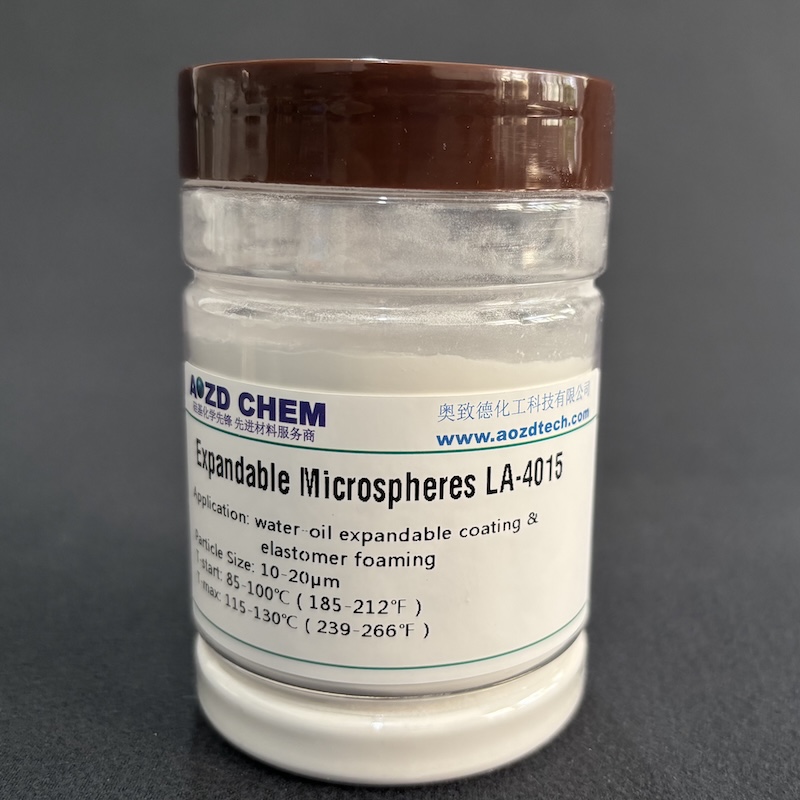
Polymer additives including colorants, flame retardants, and stabilizers can interfere with blowing agents solubility and distribution. These components may preferentially absorb dissolved blowing agents or alter local viscosity, causing uneven expansion rates. Testing blowing agents compatibility with the complete polymer formulation, not just the base resin, ensures that the full material system supports uniform void distribution. Advanced formulations sometimes employ expandable microspheres as a controlled nucleation mechanism to overcome these compatibility challenges.
Surface Tension and Bubble Stability
Blowing agents require proper bubble stabilization to maintain cell size uniformity during foam development and cooling. Surface-active compounds and polymer chain entanglement at bubble interfaces control whether cells coalesce or remain stable. When blowing agents lack adequate stabilization mechanisms, bubble coalescence occurs preferentially in regions of lower viscosity or elevated temperature, merging small cells into larger irregular voids. Uncontrolled coalescence dramatically increases void size variation and reduces overall material consistency.
Process Parameter Optimization Solutions
Temperature Control and Heating Uniformity
Establishing uniform thermal profiles across processing equipment represents a fundamental requirement for consistent blowing agents performance. Zone-based temperature control in extruders and injection molding machines ensures that polymer melt temperature remains within a narrow target range throughout the blowing agents saturation and expansion phases. Reducing temperature gradients directly minimizes the nucleation site variations that produce uneven void distribution. Precise thermostatic management transforms blowing agents from a source of inconsistency into a controllable foam production parameter.
Blowing Agents Selection and Dosage Precision
Selecting appropriate blowing agents for the specific polymer system and processing conditions significantly improves cellular uniformity. Chemical blowing agents that decompose at the correct temperature and pressure window produce more predictable void distributions than poorly matched alternatives. Precise dosage control ensures that blowing agents concentration remains consistent batch-to-batch, preventing the over- or under-saturation conditions that cause irregularities. Advanced measurement and injection systems enable manufacturers to deliver exact blowing agents quantities that optimize void distribution while maintaining target foam density.
FAQ
What causes blowing agents to produce larger voids in some areas than others?
Blowing agents expand at different rates depending on local polymer viscosity, temperature, and gas saturation levels. Warmer, lower-viscosity regions allow blowing agents to expand more freely, creating larger voids, while cooler or higher-viscosity zones restrict gas expansion. Temperature gradients, uneven mixing, and pressure release variations all contribute to this differential expansion. Controlling these processing parameters helps blowing agents produce more uniform void distributions throughout the foam structure.
How do expandable microspheres address uneven void distribution from blowing agents?
Expandable microspheres function as nucleation control agents that work alongside chemical or physical blowing agents to ensure consistent cell initiation. These microspheres provide predetermined expansion points, enabling more uniform void formation across the material volume. By combining expandable microspheres with optimized blowing agents chemistry and processing parameters, manufacturers achieve significantly more consistent cellular structures than blowing agents alone can provide. This dual-mechanism approach represents an advanced solution for applications requiring strict void distribution tolerances.
Can changing processing temperature alone improve blowing agents uniformity?
While temperature control represents one critical factor, improving blowing agents uniformity typically requires simultaneous optimization of mixing duration, pressure release profiles, and material formulation. Blowing agents respond to the combined effect of multiple parameters rather than any single variable. Manufacturers should implement comprehensive process adjustments including thermal management, residence time control, and pressure scheduling to achieve the uneven void distribution improvements their applications demand. A holistic optimization approach yields more reliable and dramatic performance gains than isolated parameter adjustments.