
 EN
EN
The leather industry relies on complex chemical interactions to achieve desired properties in finished products. Among the various chemicals used in leather processing, silicone emulsion has emerged as a crucial component that significantly impacts the final quality and characteristics of leather goods. Understanding how silicone emulsion interacts with other leather chemicals is essential for manufacturers seeking optimal results in their production processes. This comprehensive analysis explores the intricate relationships between silicone emulsion and various leather chemicals, providing insights into compatibility, application methods, and best practices for achieving superior leather quality.
Understanding Silicone Emulsion in Leather Processing
Chemical Composition and Properties
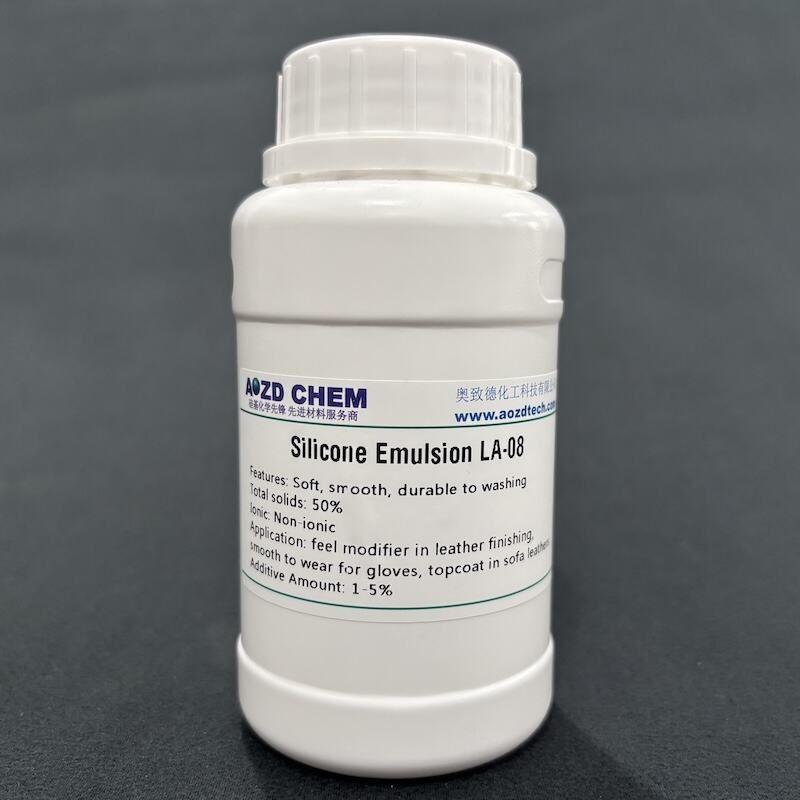
Silicone emulsion represents a specialized formulation of silicone polymers dispersed in water, creating a stable system that delivers exceptional performance in leather applications. The molecular structure of silicone emulsion consists of siloxane chains that provide unique properties such as water repellency, softness enhancement, and surface protection. These characteristics make silicone emulsion particularly valuable in leather finishing processes where durability and aesthetic appeal are paramount. The emulsification process ensures uniform distribution throughout the leather matrix, enabling consistent results across different leather types and processing conditions.
The stability of silicone emulsion under various pH conditions allows it to maintain its effectiveness throughout different stages of leather processing. This chemical resilience enables manufacturers to incorporate silicone emulsion into existing production workflows without significant modifications to established procedures. The amphiphilic nature of silicone emulsion facilitates its interaction with both hydrophilic and hydrophobic components commonly found in leather chemistry, making it a versatile additive for comprehensive leather treatment formulations.
Application Methods and Techniques
Professional leather manufacturers employ various application methods to optimize the benefits of silicone emulsion in their products. Spray application represents one of the most common techniques, allowing for uniform coverage and controlled dosage across leather surfaces. This method ensures that the silicone emulsion penetrates effectively into the leather structure while maintaining surface integrity. The spray technique also enables manufacturers to apply silicone emulsion at different stages of the finishing process, depending on the desired final properties.
Padding and dipping methods offer alternative approaches for applying silicone emulsion, particularly in large-scale production environments. These techniques provide excellent penetration and uniform distribution, ensuring consistent results across entire batches of leather products. The choice of application method often depends on the specific leather type, intended use, and compatibility with other chemical treatments in the production sequence.
Interactions with Tanning Agents
Chromium Tanning Compatibility
The relationship between silicone emulsion and chromium tanning agents represents a critical aspect of modern leather processing. Chromium salts, being the most widely used tanning agents, create specific chemical environments that can influence the behavior of silicone emulsion. Research indicates that silicone emulsion exhibits excellent compatibility with chromium-tanned leather, enhancing the overall stability and performance characteristics of the final product. The interaction mechanism involves the formation of stable complexes that do not interfere with the cross-linking properties of chromium tanning.
The timing of silicone emulsion application in relation to chromium tanning significantly affects the final leather properties. When applied during the post-tanning phase, silicone emulsion can effectively modify surface characteristics without compromising the structural integrity established by chromium tanning. This sequential approach allows manufacturers to achieve optimal results by leveraging the complementary properties of both chemical systems.
Vegetable Tanning Interactions
Vegetable tanning processes utilize natural tannins that create unique chemical environments for silicone emulsion interaction. The polyphenolic compounds present in vegetable tannins can form hydrogen bonds with silicone emulsion components, creating synergistic effects that enhance leather quality. This interaction often results in improved water resistance and enhanced softness while maintaining the natural characteristics associated with vegetable-tanned leather.
The pH conditions typical in vegetable tanning processes align well with the stability range of silicone emulsion, ensuring consistent performance throughout the treatment cycle. Manufacturers working with vegetable-tanned leather often find that silicone emulsion enhances the natural properties of their products while providing additional protective benefits that extend the lifespan of finished leather goods.
Chemical Compatibility with Finishing Agents
Acrylic Polymer Interactions
Acrylic polymers serve as fundamental components in leather finishing formulations, and their interaction with silicone emulsion plays a crucial role in determining final product characteristics. The compatibility between silicone emulsion and acrylic polymers enables the creation of hybrid systems that combine the film-forming properties of acrylics with the water-repelling characteristics of silicones. This combination often results in finishes that exhibit superior durability, flexibility, and resistance to environmental factors.
The molecular compatibility between silicone emulsion and acrylic polymers allows for the creation of stable blends that maintain their properties over extended periods. This stability is particularly important in commercial applications where consistent performance is essential for product quality and customer satisfaction. The interaction also enables manufacturers to adjust the balance between different properties by varying the ratio of silicone emulsion to acrylic polymers in their formulations.
Polyurethane Coating Compatibility
Polyurethane coatings represent another significant category of finishing agents that interact with silicone emulsion in leather applications. The chemical structure of polyurethanes allows for good compatibility with silicone emulsion, creating composite systems that offer enhanced performance characteristics. This compatibility enables manufacturers to develop finishing systems that combine the excellent mechanical properties of polyurethanes with the water-repelling and softening effects of silicone emulsion.
The interaction between silicone emulsion and polyurethane coatings often results in improved adhesion, flexibility, and resistance to cracking. These benefits are particularly valuable in leather applications that require high durability and long-term performance. The synergistic effects of this combination have led to its widespread adoption in premium leather finishing applications where superior quality is paramount.
Impact on Dye and Pigment Systems
Anionic Dye Compatibility
Anionic dyes represent a major category of colorants used in leather processing, and their interaction with silicone emulsion requires careful consideration to achieve optimal results. The ionic nature of anionic dyes can influence the behavior of silicone emulsion, particularly in terms of distribution and penetration characteristics. Understanding this interaction enables manufacturers to optimize their dyeing processes while incorporating the benefits of silicone emulsion treatment.
The application sequence of anionic dyes and silicone emulsion significantly affects the final color intensity and uniformity. Research indicates that proper timing and pH control can minimize any potential interference while maximizing the beneficial effects of both components. This optimization process often involves adjusting the concentration and application method of silicone emulsion to achieve the desired balance between color development and surface treatment effects.
Professional leather processors have developed specific protocols for managing the interaction between silicone emulsion and anionic dyes. These protocols typically involve careful pH monitoring, staged application procedures, and quality control measures to ensure consistent results. The implementation of such protocols has enabled manufacturers to achieve superior color quality while maintaining the protective and aesthetic benefits provided by silicone emulsion treatment.
Pigment Dispersion Effects
Pigment-based coloring systems interact differently with silicone emulsion compared to dye systems, creating unique opportunities and challenges in leather processing. The particle size and surface characteristics of pigments can influence how silicone emulsion distributes within the leather matrix, affecting both color development and surface properties. Understanding these interactions enables manufacturers to optimize their pigment formulations for enhanced performance and appearance.
The presence of silicone emulsion can modify the rheological properties of pigment dispersions, potentially affecting application characteristics and final appearance. This interaction often requires adjustments to mixing procedures, application techniques, and curing conditions to achieve optimal results. Manufacturers who successfully manage these interactions typically achieve superior color stability and enhanced surface properties in their finished leather products.
Synergistic Effects with Softening Agents
Protein-Based Softeners
Protein-based softening agents represent a traditional approach to enhancing leather flexibility and hand feel, and their interaction with silicone emulsion creates interesting synergistic effects. The amino acid groups present in protein softeners can form weak interactions with silicone emulsion components, leading to enhanced distribution and improved overall performance. This interaction often results in leather that exhibits superior softness and flexibility compared to treatments using either component alone.
The biocompatibility of protein-based softeners aligns well with the relatively inert nature of silicone emulsion, creating treatment systems that are both effective and environmentally responsible. This combination has gained popularity among manufacturers seeking to balance performance requirements with sustainability considerations. The synergistic effects typically manifest as improved penetration, enhanced durability, and superior hand feel characteristics.
Synthetic Softening Agents
Modern synthetic softening agents offer specific performance advantages that can be enhanced through interaction with silicone emulsion. The molecular design of synthetic softeners often enables more controlled interactions with silicone emulsion, allowing manufacturers to fine-tune the properties of their finished leather products. This control capability is particularly valuable in applications requiring specific performance characteristics or consistent quality standards.
The chemical stability of synthetic softening agents complements the durability characteristics of silicone emulsion, creating treatment systems that maintain their effectiveness over extended periods. This longevity is crucial in commercial applications where product performance must remain consistent throughout the useful life of leather goods. The combination often results in leather that retains its softness and flexibility even under demanding use conditions.
pH and Chemical Stability Considerations
Optimal pH Ranges
The pH environment significantly influences the behavior and effectiveness of silicone emulsion in leather processing applications. Most commercial silicone emulsion formulations demonstrate optimal stability and performance within specific pH ranges, typically between 6.0 and 8.5. Understanding these pH requirements enables manufacturers to optimize their process conditions for maximum effectiveness and consistent results. The pH stability of silicone emulsion also affects its compatibility with other leather chemicals, making pH management a critical aspect of successful leather processing.
Manufacturers must carefully monitor and control pH throughout the leather processing sequence to ensure that silicone emulsion maintains its effectiveness. This control often involves the use of buffering agents and pH adjustment chemicals that themselves must be compatible with silicone emulsion. The development of comprehensive pH management strategies has enabled leather processors to achieve consistent quality while maximizing the benefits of silicone emulsion treatment.
Chemical Stability Factors
The long-term stability of silicone emulsion in leather applications depends on various chemical factors including temperature, ionic strength, and the presence of other reactive species. Understanding these stability factors enables manufacturers to optimize storage conditions, application procedures, and processing parameters for maximum effectiveness. The chemical inertness of silicone polymers contributes to the overall stability of silicone emulsion systems, making them suitable for long-term storage and use.
Environmental factors such as temperature fluctuations and humidity variations can affect the stability of silicone emulsion in leather processing environments. Manufacturers typically implement quality control measures to monitor these factors and ensure that silicone emulsion maintains its effectiveness throughout the production process. These measures often include regular testing, proper storage protocols, and environmental monitoring systems.
FAQ
What is the optimal concentration of silicone emulsion for leather treatment?
The optimal concentration of silicone emulsion for leather treatment typically ranges from 3% to 8% by weight, depending on the specific application and desired properties. Lower concentrations (3-5%) are suitable for basic water repellency and softness enhancement, while higher concentrations (6-8%) provide more pronounced effects and enhanced durability. The exact concentration should be determined through testing with specific leather types and processing conditions to achieve optimal results without compromising other leather properties.
Can silicone emulsion be mixed directly with other leather chemicals?
Silicone emulsion can be mixed with many leather chemicals, but compatibility testing is essential before large-scale application. Direct mixing works well with most acrylic polymers, protein-based softeners, and many finishing agents. However, some anionic surfactants and certain metallic salts may cause stability issues. It is recommended to conduct small-scale compatibility tests and allow mixed systems to stand for 24-48 hours to observe any separation or chemical reactions before full-scale implementation.
How does temperature affect silicone emulsion performance in leather processing?
Temperature significantly impacts silicone emulsion performance, with optimal results typically achieved between 20°C and 40°C during application. Higher temperatures (above 45°C) may cause emulsion instability and reduce effectiveness, while lower temperatures (below 15°C) can slow penetration and affect distribution. During curing or drying phases, moderate heat (40-60°C) can enhance film formation and improve final properties. Temperature control throughout the process ensures consistent results and maximizes the benefits of silicone emulsion treatment.
What are the long-term effects of silicone emulsion on leather durability?
Silicone emulsion treatment generally enhances leather durability by providing water resistance, reducing surface wear, and maintaining flexibility over time. The silicone polymers form a protective barrier that helps prevent moisture damage, cracking, and premature aging. Long-term studies indicate that properly applied silicone emulsion can extend leather lifespan by 25-40% compared to untreated leather. However, the durability benefits depend on proper application, compatibility with other treatments, and environmental conditions during use.
Table of Contents
- Understanding Silicone Emulsion in Leather Processing
- Interactions with Tanning Agents
- Chemical Compatibility with Finishing Agents
- Impact on Dye and Pigment Systems
- Synergistic Effects with Softening Agents
- pH and Chemical Stability Considerations
-
FAQ
- What is the optimal concentration of silicone emulsion for leather treatment?
- Can silicone emulsion be mixed directly with other leather chemicals?
- How does temperature affect silicone emulsion performance in leather processing?
- What are the long-term effects of silicone emulsion on leather durability?