
 EN
EN
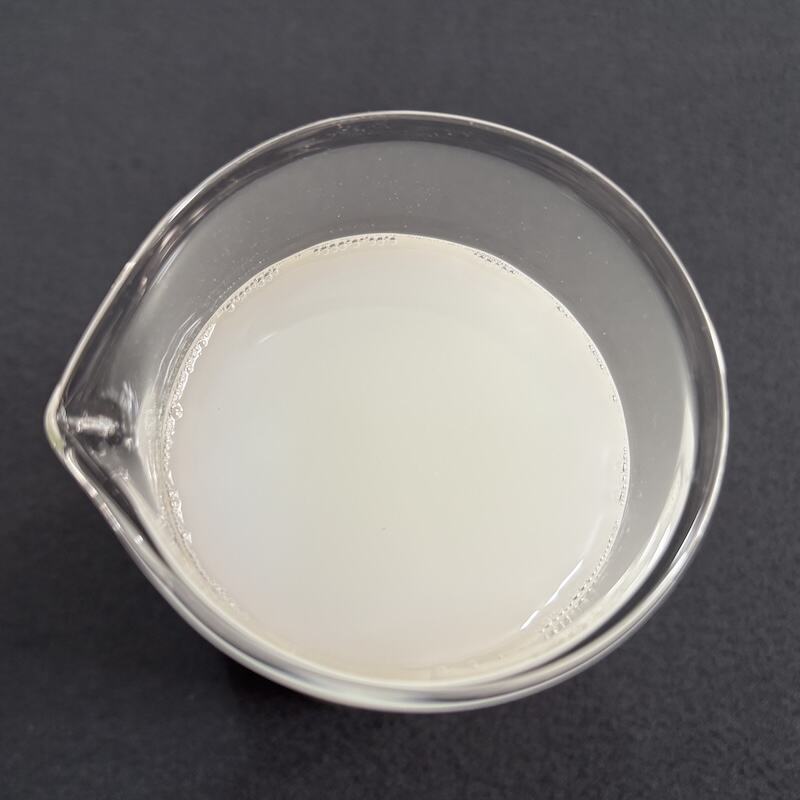
The textile manufacturing industry has witnessed remarkable advancements in spinning technologies, with vortex spinning emerging as a revolutionary method that significantly transforms yarn production. At the heart of this innovative process lies vortex spinning oil, a specialized lubricant that plays a crucial role in determining the final characteristics of the produced yarn. Understanding how vortex spinning oil affects yarn smoothness is essential for manufacturers seeking to optimize their production processes and achieve superior textile quality. This comprehensive analysis explores the intricate relationship between vortex spinning oil formulations and the resulting yarn surface characteristics, examining both the mechanical and chemical aspects that contribute to enhanced yarn smoothness.
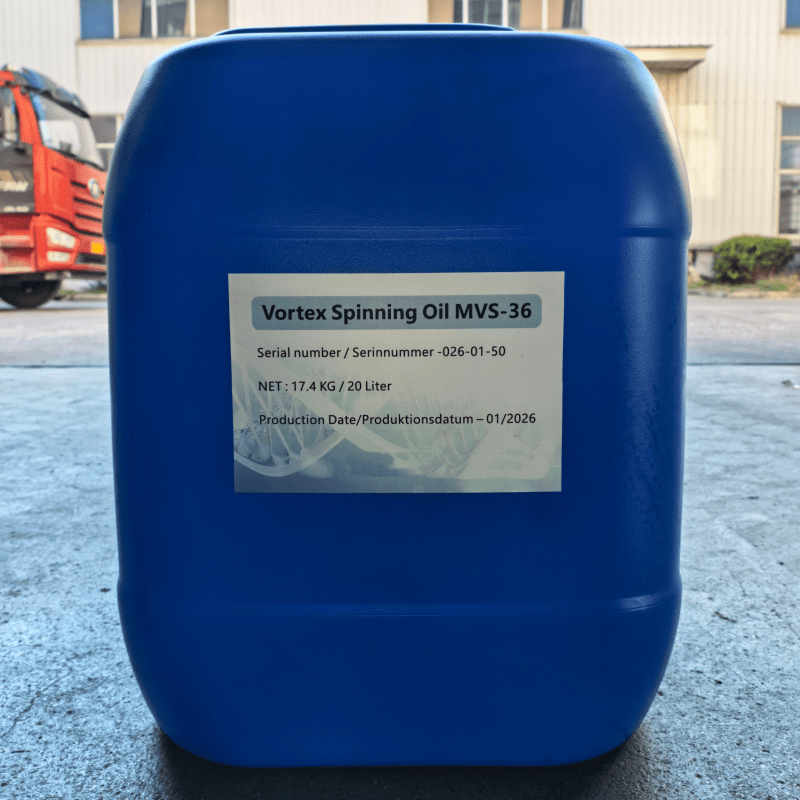
Fundamental Mechanisms of Vortex Spinning Oil Action
Lubrication Properties and Fiber Interaction
The primary mechanism through which vortex spinning oil influences yarn smoothness involves its exceptional lubrication properties during the spinning process. When fibers undergo the intense mechanical stress of vortex spinning, the oil creates a protective layer between individual fibers and spinning components. This lubrication reduces friction coefficients significantly, allowing fibers to move more freely and align themselves in optimal configurations. The molecular structure of vortex spinning oil is specifically engineered to maintain its lubricating properties under high-speed rotation conditions, ensuring consistent performance throughout the spinning process.
Furthermore, the viscosity characteristics of vortex spinning oil play a vital role in controlling fiber movement dynamics. The oil's carefully calibrated viscosity ensures that fibers experience controlled drag forces, preventing excessive tension that could lead to fiber breakage or irregular yarn formation. This controlled environment promotes the natural alignment of fibers, resulting in yarns with superior surface smoothness and reduced hairiness. The interaction between oil molecules and fiber surfaces creates temporary bonds that facilitate orderly fiber arrangement while maintaining the necessary flexibility for proper yarn formation.
Surface Tension Reduction and Fiber Cohesion
Vortex spinning oil demonstrates remarkable effectiveness in reducing surface tension between fibers, which directly impacts the smoothness of the final yarn product. By lowering interfacial tension, the oil enables better fiber-to-fiber contact and promotes more uniform fiber distribution throughout the yarn cross-section. This phenomenon is particularly important in vortex spinning, where the air vortex creates complex fluid dynamics that can otherwise lead to irregular fiber positioning. The oil acts as a mediating agent, facilitating smooth transitions between fiber layers and minimizing surface irregularities.
The cohesive properties imparted by vortex spinning oil contribute significantly to yarn smoothness by ensuring that individual fibers remain properly integrated within the yarn structure. Unlike conventional ring spinning, vortex spinning relies on aerodynamic forces and controlled turbulence to twist and consolidate fibers. The presence of specialized spinning oil enhances this process by providing temporary adhesive forces between fibers, preventing loose ends from protruding and creating a more compact, smooth yarn surface. These cohesive effects are maintained even after the spinning process, contributing to the long-term stability of yarn smoothness characteristics.
Chemical Composition Impact on Yarn Surface Quality
Polymer Additives and Surface Modification
The chemical formulation of vortex spinning oil includes sophisticated polymer additives that directly influence yarn surface characteristics. These polymers are designed to form ultra-thin films on fiber surfaces, creating a protective barrier that smooths out microscopic irregularities and imperfections. The molecular weight and branching patterns of these polymer additives are carefully optimized to achieve maximum smoothness enhancement without compromising yarn strength or processability. Advanced vortex spinning oil formulations utilize multiple polymer systems that work synergistically to achieve superior surface modification effects.
Modern vortex spinning oil incorporates specialized surfactants and emulsifiers that enhance the wetting properties of the oil on various fiber types. These chemical agents ensure uniform oil distribution across all fiber surfaces, eliminating dry spots that could lead to increased friction and reduced smoothness. The molecular structure of these additives is designed to maintain stability under the extreme conditions of vortex spinning, including high temperatures, intense mechanical stress, and rapid air movements. This chemical stability ensures consistent smoothness enhancement throughout extended production runs.
Antioxidant Systems and Thermal Stability
The inclusion of advanced antioxidant systems in vortex spinning oil formulations plays a crucial role in maintaining yarn smoothness over time. These antioxidants prevent the oxidative degradation of oil components under high-temperature spinning conditions, ensuring that the smoothness-enhancing properties remain effective throughout the entire spinning process. Thermal stability is particularly important in vortex spinning applications, where the combination of mechanical friction and air turbulence generates significant heat that could otherwise compromise oil performance.
Phenolic and aminic antioxidants commonly used in vortex spinning oil provide complementary protection mechanisms that extend the effective working life of the lubricant. These systems prevent the formation of oxidation products that could create deposits on fiber surfaces or spinning equipment, which would negatively impact yarn smoothness. The synergistic action of multiple antioxidant types ensures comprehensive protection against various oxidative pathways, maintaining consistent oil performance even under challenging operating conditions. This chemical stability translates directly into more predictable and reliable yarn smoothness characteristics.
Processing Parameters and Oil Performance Optimization
Application Rate Control and Distribution
The effectiveness of vortex spinning oil in enhancing yarn smoothness is heavily dependent on precise application rate control and uniform distribution throughout the fiber mass. Optimal oil application rates typically range from 0.3% to 0.8% by weight of fiber, with specific rates determined by fiber type, spinning speed, and desired yarn characteristics. Too little oil results in insufficient lubrication and increased friction, leading to rougher yarn surfaces and potential fiber damage. Conversely, excessive oil application can cause fiber clumping, uneven yarn formation, and processing difficulties that ultimately compromise smoothness.
Advanced application systems utilize precision metering pumps and atomization technology to ensure uniform vortex spinning oil distribution across all fibers entering the spinning process. The timing and location of oil application are critical factors that influence how effectively the oil can penetrate fiber bundles and coat individual filaments. Pre-spinning oil application allows for better fiber preparation and conditioning, while in-process application provides immediate lubrication benefits during the critical yarn formation stages. The synergistic effect of properly timed and distributed oil application maximizes the smoothness enhancement potential of the vortex spinning process.
Temperature Management and Viscosity Control
Temperature control represents a fundamental aspect of vortex spinning oil performance optimization, as viscosity changes directly impact lubrication effectiveness and yarn smoothness outcomes. Most vortex spinning oils are formulated to maintain optimal viscosity characteristics within a specific temperature range, typically between 60°C and 80°C. Operating outside this range can result in either excessive oil thickness that impedes fiber movement or insufficient viscosity that provides inadequate lubrication protection. Maintaining proper temperature control ensures consistent oil performance and predictable smoothness enhancement throughout production cycles.
Viscosity index improvers incorporated into modern vortex spinning oil formulations help maintain stable lubrication properties across varying temperature conditions. These additives minimize viscosity fluctuations that could otherwise lead to inconsistent yarn smoothness characteristics. The relationship between oil temperature, viscosity, and yarn smoothness is complex and requires careful monitoring and adjustment to achieve optimal results. Advanced process control systems continuously monitor oil temperature and automatically adjust heating or cooling systems to maintain optimal viscosity conditions for maximum smoothness enhancement.
Fiber Type Compatibility and Smoothness Outcomes
Natural Fiber Applications and Performance
The interaction between vortex spinning oil and natural fibers presents unique considerations for achieving optimal yarn smoothness. Cotton fibers, with their complex cellular structure and natural wax content, require specialized oil formulations that complement existing fiber lubricants while providing additional smoothness enhancement. Vortex spinning oil must penetrate the cotton fiber's primary wall structure to provide effective lubrication without interfering with the fiber's natural cohesive properties. The hydrophilic nature of cotton fibers necessitates oil formulations with appropriate wetting agents that ensure uniform distribution and penetration.
Wool fibers present different challenges and opportunities for vortex spinning oil application due to their proteinaceous structure and natural scale formation. The oil must work in harmony with wool's inherent lubricating properties while providing additional smoothness benefits through scale lubrication and friction reduction. Modern vortex spinning oil formulations for wool applications include specialized conditioning agents that temporarily modify scale structure to reduce inter-fiber friction and enhance overall yarn smoothness. The complex interaction between oil chemistry and wool's amino acid structure requires careful formulation balance to achieve optimal smoothness without compromising fiber integrity.
Synthetic Fiber Processing and Enhancement
Synthetic fibers such as polyester and nylon present distinct opportunities for vortex spinning oil optimization due to their uniform structure and predictable surface characteristics. These fibers typically have lower natural lubricity compared to cotton or wool, making them excellent candidates for smoothness enhancement through specialized oil application. Vortex spinning oil formulations for synthetic fibers focus on providing superior boundary lubrication that reduces fiber-to-fiber and fiber-to-metal friction during the spinning process. The smooth, regular surface of synthetic fibers allows for more uniform oil distribution and more predictable smoothness enhancement outcomes.
The thermal properties of synthetic fibers require vortex spinning oil formulations with enhanced thermal stability to prevent oil degradation under the elevated temperatures often encountered during synthetic fiber processing. Advanced synthetic fiber spinning oils incorporate heat-resistant base stocks and thermal stabilizers that maintain lubrication effectiveness even at temperatures exceeding 100°C. This thermal stability ensures consistent smoothness enhancement throughout extended production runs and prevents the formation of thermal degradation products that could negatively impact yarn surface quality. The compatibility between synthetic fiber chemistry and oil formulation components is crucial for achieving maximum smoothness benefits while maintaining fiber integrity.
Quality Control and Measurement Techniques
Surface Roughness Evaluation Methods
Accurate measurement of yarn smoothness requires sophisticated testing methodologies that can quantify the subtle surface characteristics influenced by vortex spinning oil application. Laser-based surface profiling systems provide high-resolution measurements of yarn surface irregularities, enabling precise quantification of smoothness improvements achieved through oil optimization. These systems utilize coherent light sources to detect microscopic variations in yarn surface topology, generating detailed profiles that correlate directly with tactile smoothness perception. The data generated from these measurements allows for statistical analysis of smoothness improvements across different vortex spinning oil formulations and application parameters.
Friction coefficient testing represents another critical measurement technique for evaluating the effectiveness of vortex spinning oil in enhancing yarn smoothness. Specialized testing equipment measures the resistance encountered when yarn samples are drawn across standardized surfaces under controlled conditions. Lower friction coefficients typically correlate with smoother yarn surfaces and improved processing characteristics in downstream operations. These measurements provide quantitative data that can be used to optimize vortex spinning oil formulations and application procedures for maximum smoothness enhancement. The correlation between measured friction coefficients and subjective smoothness evaluations helps establish quality control parameters for production operations.
Comparative Analysis and Performance Benchmarking
Establishing performance benchmarks for vortex spinning oil effectiveness requires systematic comparison of yarn samples produced under varying oil conditions. Control samples produced without oil application provide baseline measurements against which oil-treated samples can be evaluated. Statistical analysis of smoothness measurements across multiple production batches helps identify optimal oil formulations and application parameters while accounting for normal process variation. These comparative studies often reveal significant improvements in yarn smoothness that justify the investment in specialized vortex spinning oil systems.
Long-term performance monitoring involves tracking yarn smoothness characteristics over extended production periods to ensure consistent oil performance and identify potential optimization opportunities. This monitoring includes regular sampling and testing of yarn produced under standard operating conditions, with results compared to established smoothness targets. Trending analysis helps identify gradual changes in oil performance that might indicate the need for formulation adjustments or process modifications. The data collected through comprehensive performance benchmarking provides valuable insights for continuous improvement initiatives and helps maintain consistent yarn quality standards throughout production operations.
Economic Impact and Production Efficiency
Cost-Benefit Analysis of Oil Implementation
The economic justification for implementing specialized vortex spinning oil programs extends beyond the immediate costs of oil procurement and application systems. Improved yarn smoothness directly translates to reduced processing problems in downstream operations such as weaving, knitting, and dyeing. Smoother yarns experience fewer breaks during high-speed processing, resulting in increased productivity and reduced waste. The reduction in machine downtime and maintenance requirements often provides rapid payback for the investment in quality vortex spinning oil systems. Additionally, the premium pricing available for higher-quality smooth yarns can significantly improve profit margins for textile manufacturers.
Quantifying the economic benefits of vortex spinning oil requires comprehensive analysis of both direct and indirect cost impacts. Direct benefits include reduced fiber waste, improved yarn strength, and decreased processing problems, while indirect benefits encompass improved customer satisfaction and market differentiation opportunities. The total cost of ownership analysis should consider oil costs, application equipment, maintenance requirements, and potential production efficiency improvements. Many manufacturers find that the economic benefits of improved yarn smoothness through vortex spinning oil application significantly exceed the associated costs, making it a highly profitable investment in production quality enhancement.
Productivity Enhancement and Waste Reduction
The implementation of effective vortex spinning oil systems typically results in measurable productivity improvements through reduced yarn breaks and improved processing consistency. Smoother yarns generated through proper oil application experience fewer interruptions during subsequent processing operations, leading to higher effective production rates and improved equipment utilization. The reduction in yarn breaks also decreases the labor requirements for machine tending and quality control, contributing to overall cost reduction and productivity enhancement. These improvements become particularly significant in high-speed automated production environments where even small reductions in break rates translate to substantial productivity gains.
Waste reduction represents another significant economic benefit of vortex spinning oil implementation, as smoother yarns experience less damage during processing and require fewer quality-related discards. The improved fiber utilization achieved through effective oil application reduces raw material costs and environmental waste disposal expenses. Additionally, the enhanced consistency of yarn characteristics reduces the variability in finished fabric properties, leading to fewer quality rejections and rework requirements. The cumulative effect of these waste reduction benefits often justifies the investment in premium vortex spinning oil systems even in cost-sensitive market segments where every efficiency improvement contributes meaningfully to competitive advantage.
FAQ
How does vortex spinning oil concentration affect yarn smoothness results
The concentration of vortex spinning oil has a direct correlation with yarn smoothness, but the relationship follows an optimal curve rather than a linear progression. Concentrations between 0.4% and 0.6% by fiber weight typically provide the best balance of lubrication benefits without causing processing problems. Lower concentrations may provide insufficient lubrication, leading to increased fiber friction and rougher yarn surfaces, while excessive concentrations can cause fiber clumping and irregular yarn formation that actually decreases smoothness. Regular monitoring and adjustment of oil concentration based on fiber type and spinning conditions ensures optimal smoothness enhancement.
What temperature conditions optimize vortex spinning oil performance for maximum smoothness
Optimal temperature conditions for vortex spinning oil performance typically range between 65°C and 75°C, where most formulations maintain their ideal viscosity characteristics for maximum smoothness enhancement. Temperatures below this range may cause excessive oil viscosity that impedes proper fiber movement and reduces lubrication effectiveness, while higher temperatures can lead to oil degradation and reduced smoothness benefits. Modern spinning operations utilize precise temperature control systems to maintain consistent oil performance throughout production runs, ensuring predictable smoothness outcomes and optimal yarn quality.
Can different fiber types require specific vortex spinning oil formulations for smoothness optimization
Different fiber types indeed require tailored vortex spinning oil formulations to achieve optimal smoothness results due to variations in fiber surface chemistry, structure, and natural lubricity. Cotton fibers benefit from oils with enhanced penetration capabilities to work with natural waxes, while synthetic fibers require formulations with superior boundary lubrication properties. Wool processing demands oils that complement the natural lanolin content without interfering with scale structure, and blended fibers need balanced formulations that address the requirements of multiple fiber types simultaneously. Selecting the appropriate oil formulation for specific fiber applications is crucial for maximizing smoothness enhancement benefits.
How long do the smoothness benefits of vortex spinning oil persist in finished yarn products
The smoothness benefits imparted by vortex spinning oil typically persist throughout the yarn's useful life, as the oil creates permanent improvements in fiber arrangement and surface characteristics during the spinning process. While some of the temporary lubrication effects may diminish over time, the fundamental structural improvements in yarn formation remain stable under normal storage and handling conditions. The durability of smoothness benefits depends on factors such as oil formulation quality, application effectiveness, and subsequent processing conditions, but properly treated yarns generally maintain their enhanced smoothness characteristics through weaving, knitting, and finishing operations.
Table of Contents
- Fundamental Mechanisms of Vortex Spinning Oil Action
- Chemical Composition Impact on Yarn Surface Quality
- Processing Parameters and Oil Performance Optimization
- Fiber Type Compatibility and Smoothness Outcomes
- Quality Control and Measurement Techniques
- Economic Impact and Production Efficiency
-
FAQ
- How does vortex spinning oil concentration affect yarn smoothness results
- What temperature conditions optimize vortex spinning oil performance for maximum smoothness
- Can different fiber types require specific vortex spinning oil formulations for smoothness optimization
- How long do the smoothness benefits of vortex spinning oil persist in finished yarn products