
 EN
EN
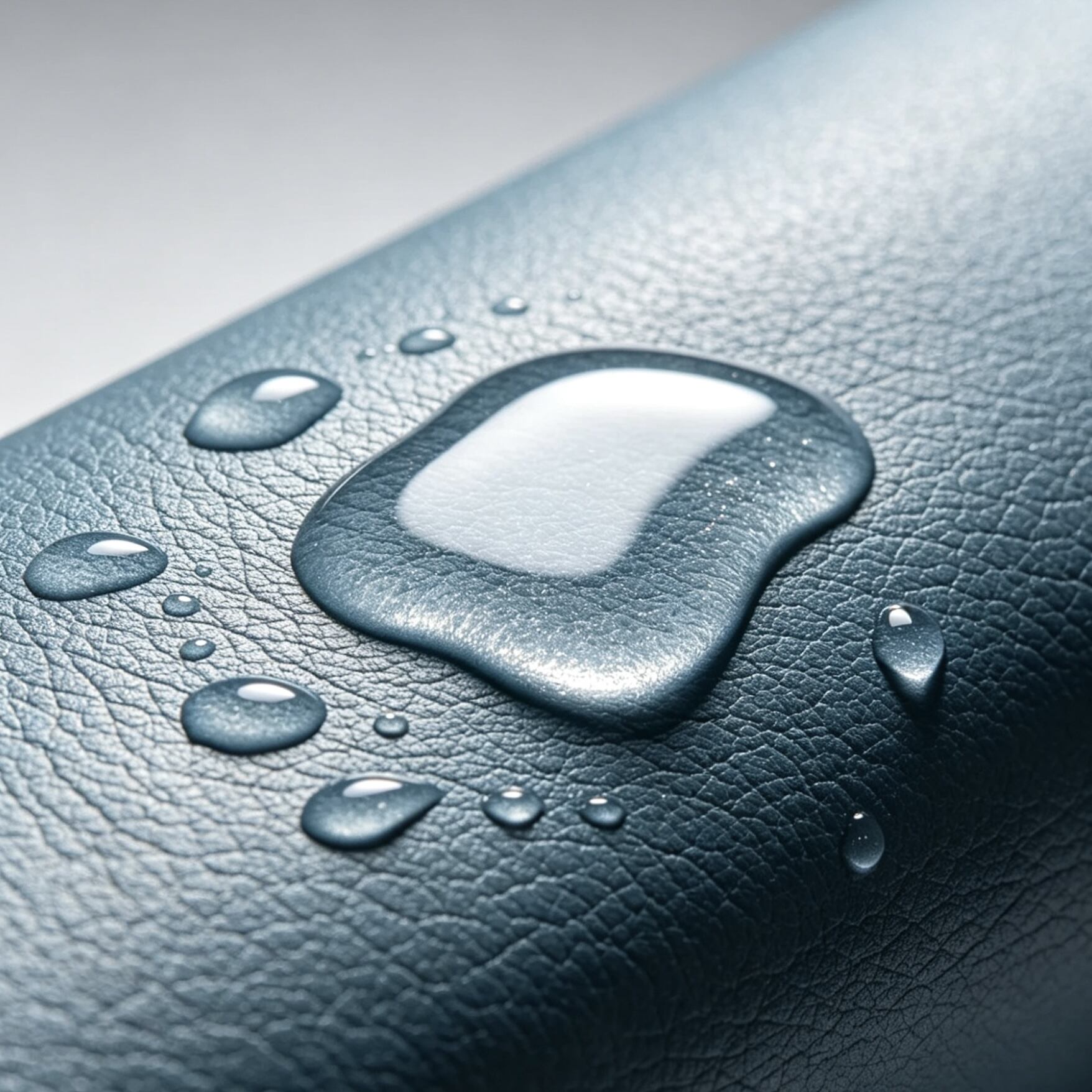
A feeling agent is supposed to enhance the sensory experience of a product — delivering that silky, smooth, or luxurious skin feel that defines premium formulations. So when your feeling agent starts leaving a greasy, sticky, or waxy residue on surfaces instead of absorbing cleanly, it signals a real formulation or application problem. This issue is more common than many formulators expect, and it can quietly undermine product quality, consumer perception, and brand credibility. Understanding why this happens is the first step toward correcting it.
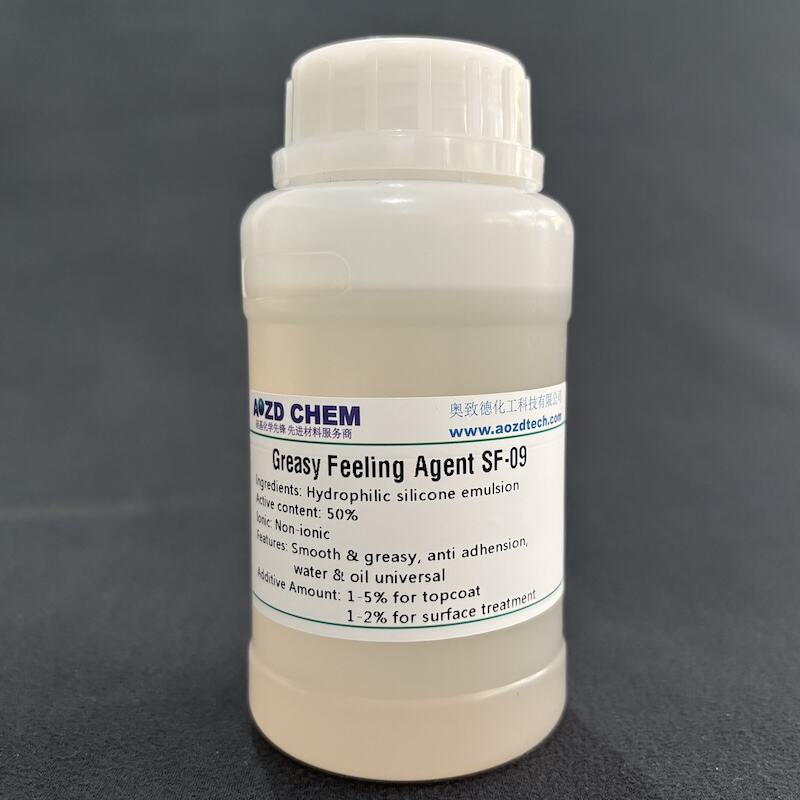
The residue problem tied to a feeling agent rarely has a single cause. It can stem from formulation imbalances, incorrect dosing, incompatible ingredient combinations, or simply using the wrong type of feeling agent for the target application. In industrial and personal care contexts alike, a greasy residue is not just a cosmetic inconvenience — it can affect substrate adhesion, film formation, surface cleanliness, and downstream processing. This article breaks down the most likely causes and provides practical guidance for diagnosing and resolving the problem.
Understanding How a Feeling Agent Works on Surfaces
The Role of a Feeling Agent in Formulation
A feeling agent is a functional ingredient added to formulations to modify how a surface feels to the touch. In personal care, this includes creams, lotions, and hair care products. In industrial or specialty coatings, a feeling agent can be used to alter the tactile properties of a film, fabric, leather, or plastic surface. The key purpose is sensory modification — delivering slip, softness, dryness, or a combination of these effects.
The way a feeling agent interacts with a surface depends heavily on its chemical structure. Some feeling agents are silicone-based, others are fatty acid esters, waxes, or polymer emulsions. Each chemistry behaves differently on different substrates and under different environmental conditions. When a feeling agent performs as intended, it either absorbs into the surface, forms a thin, imperceptible film, or distributes evenly without pooling.
The residue problem begins when this controlled interaction breaks down. Instead of a thin, even distribution, the feeling agent accumulates, pools, or sits on top of the surface without spreading or absorbing properly. This results in the greasy or waxy residue that disrupts both the sensory outcome and the visual appearance of the finished product.
Absorption Versus Surface Accumulation
A well-selected feeling agent should either absorb into the substrate or form a very thin boundary layer. The line between a desirable smooth feel and an undesirable greasy residue is often determined by how quickly and efficiently the feeling agent spreads across the surface and whether it has an affinity for the substrate material. When absorption is poor or the spread rate is too slow, residue forms.
Substrate type plays a significant role here. Porous surfaces like skin or fabric can absorb certain feeling agent chemistries far more effectively than non-porous surfaces like glass, plastic, or metal. On non-porous substrates, almost any feeling agent used at too high a concentration will leave a detectable residue. This is why the dosage and substrate compatibility of a feeling agent must be carefully evaluated before finalizing a formulation.
Temperature and humidity also affect absorption behavior. In cooler or more humid environments, a feeling agent may spread more slowly, increasing the chance of surface accumulation. Formulators working across different climates or application conditions must account for these variables to avoid residue problems that appear inconsistently in field use.
Common Causes of Greasy Residue from a Feeling Agent
Excessive Dosage in the Formulation
One of the most straightforward reasons a feeling agent leaves greasy residue is that it has simply been overdosed. Every feeling agent has an optimal use range, and exceeding that range will typically result in a surface build-up that the substrate cannot absorb or distribute. The residue you see is essentially the excess material that has nowhere to go.
This issue is especially common when formulators attempt to intensify the sensory effect by increasing the concentration. While a higher dose of feeling agent might seem like it would deliver a more luxurious feel, beyond the threshold, it crosses into the territory of greasy residue. A targeted, well-calibrated dosage is far more effective at delivering the desired tactile outcome without surface contamination.
To diagnose dosage-related residue, the simplest approach is to reduce the feeling agent concentration incrementally and evaluate surface feel and cleanliness at each level. Most feeling agent products come with recommended inclusion rates from the manufacturer, and staying within those boundaries is a reliable starting point.
Incompatibility With Other Formulation Ingredients
A feeling agent does not function in isolation. It interacts with every other ingredient in the formulation — emulsifiers, solvents, thickeners, active ingredients, and film formers. When incompatibilities exist, they can cause phase separation, uneven distribution, or a change in the viscosity profile that prevents the feeling agent from spreading properly. The result is localized concentration of the feeling agent on the surface, which reads as greasy residue.
Certain emulsifier systems can destabilize silicone-based feeling agents, causing them to coalesce into droplets rather than form a uniform phase. Similarly, high-polarity solvents can interact with ester-based feeling agents in ways that reduce their ability to stay homogeneously distributed in the product. These chemical conflicts manifest visually and tactilely after the product is applied.
Conducting compatibility testing between the feeling agent and all other ingredients before scaling is critical. If residue only appears after storage, this often indicates an emulsion stability issue rather than an immediate incompatibility — meaning the feeling agent was initially well-distributed but separated over time, concentrating at the surface and causing residue during application.
Wrong Type of Feeling Agent for the Substrate or Application
Not every feeling agent is designed for every substrate or application method. A feeling agent formulated for skin care emulsions may perform very differently when applied to a textile, leather, or hard surface coating. Using a feeling agent in an application context it was not designed for is a very common source of residue problems, particularly when formulators transfer chemistries across different product categories.
Heavier, oilier feeling agents such as certain natural oil derivatives or long-chain fatty acid esters will almost always leave visible residue on non-absorbing surfaces. Lighter, more volatile silicone-type feeling agents tend to evaporate or spread more thinly and are better suited to applications where a clean, dry finish is required. Matching the feeling agent chemistry to the expected substrate behavior is a foundational formulation decision.
If you are using a feeling agent that was not specifically validated for your application surface, the first diagnostic step is to review the technical datasheet and evaluate whether the intended substrates match yours. Switching to a feeling agent chemistry that is better suited to the target surface often resolves residue problems more efficiently than any other corrective measure.
How Application Method and Conditions Contribute to the Problem
Application Volume and Distribution Technique
Even a well-formulated feeling agent at the correct dosage can produce greasy residue if it is applied in too high a volume at once or distributed unevenly. Application technique significantly affects how a feeling agent interacts with the surface. When too much product is applied to a localized area, the feeling agent cannot spread or absorb fast enough, leading to pooling and residue.
In industrial spray applications, nozzle type, spray distance, and application speed determine how evenly the feeling agent is distributed across the substrate. Poor spray atomization creates droplet sizes that are too large, concentrating the feeling agent in discrete spots rather than distributing it evenly. In manual or consumer-use contexts, over-application of a product containing a feeling agent has the same effect.
Educating end users or optimizing automated application parameters is often as important as the formulation itself. A technically correct formulation can still produce residue complaints if the application method introduces variability that the feeling agent chemistry cannot compensate for on its own.
Environmental Conditions During and After Application
The environment in which a feeling agent is applied and subsequently dried or cured can significantly influence whether residue forms. High humidity environments slow down the evaporation or absorption of any volatile components, leaving the non-volatile feeling agent fraction on the surface for longer. Low temperature conditions can increase the viscosity of the feeling agent, reducing its spread rate and increasing the likelihood of localized build-up.
For surface treatment applications — such as leather finishing, fabric treatment, or hard surface coating — the drying conditions after application are particularly critical. If the coating dries too quickly under high heat, the feeling agent may not have time to integrate fully into the film, causing it to migrate to the surface and form a residue layer. If it dries too slowly, the same concentration effect can occur as the vehicle evaporates and the feeling agent remains.
Matching the drying or curing conditions to the specific feeling agent chemistry being used ensures that the feeling agent integrates properly into the final film or surface. Technical datasheets often include recommended processing conditions for exactly this reason, and deviating from those parameters is a risk factor for residue formation that is easy to overlook.
Diagnosing and Resolving Residue Problems Systematically
Establishing a Root Cause Through Controlled Testing
Resolving a greasy residue problem starts with isolating variables. If your formulation contains multiple ingredients, it can be difficult to determine immediately whether the feeling agent itself is the problem or whether it is being influenced by incompatible co-ingredients, incorrect processing, or application issues. A systematic testing approach is essential to avoid making changes that do not address the actual cause.
Begin by testing the feeling agent alone at your target concentration on the intended substrate under controlled temperature and humidity. This eliminates the formulation complexity and gives you a baseline for how the feeling agent behaves by itself. If residue occurs even in isolation, the cause is either an overdose or a mismatch between the feeling agent type and the substrate. If the feeling agent performs cleanly in isolation but produces residue in the full formulation, incompatibility with co-ingredients is the more likely cause.
Document each test condition carefully. Residue problems are often inconsistent — they may appear under certain temperatures, at certain film thicknesses, or after certain storage durations. Capturing these patterns gives you diagnostic data that is far more actionable than a simple observation that the product feels greasy.
Practical Formulation Adjustments to Eliminate Residue
Once you have identified the root cause, formulation adjustments can be made systematically. If the issue is overdosage, reduce the feeling agent concentration within the recommended range and evaluate sensory outcomes at each step. If incompatibility with emulsifiers or other ingredients is the cause, consider switching to an emulsifier system that is known to be compatible with your feeling agent chemistry.
If the feeling agent type itself is the mismatch for your substrate or application, evaluate alternatives with a lighter sensory profile and higher volatility or absorption rate. A greasy feeling agent chemistry can sometimes be modified by blending it with a lighter, dry-feel component that counterbalances the heaviness without sacrificing the desired tactile enhancement entirely.
Working closely with your feeling agent supplier's technical team is strongly recommended when residue problems persist across multiple reformulation attempts. Suppliers with deep formulation expertise can provide application-specific guidance, recommend compatible ingredient systems, and help optimize the full formulation rather than just the feeling agent variable in isolation. This collaborative approach often shortens the troubleshooting timeline significantly.
FAQ
Is it always the feeling agent itself that causes greasy residue, or could other ingredients be responsible?
The feeling agent is often involved in greasy residue problems, but it is not always the sole cause. Incompatible co-ingredients such as emulsifiers, thickeners, or film formers can disrupt the distribution of the feeling agent and cause it to accumulate on the surface. Always test the feeling agent in isolation on the target substrate before concluding that the feeling agent itself is the source of the residue.
Can switching to a different type of feeling agent resolve the greasy residue problem?
Yes, in many cases switching to a feeling agent with a lighter chemistry — such as a dry-feel silicone or a lightweight ester — can eliminate greasy residue, particularly on non-porous or low-absorption surfaces. The key is matching the feeling agent chemistry to the specific substrate and sensory outcome required by your application. Review the technical specifications of alternative feeling agent options carefully before making a substitution.
How does dosage affect whether a feeling agent leaves residue?
Dosage is one of the most direct causes of greasy residue. Every feeling agent has an effective concentration range, and exceeding that range typically causes surface accumulation because the substrate cannot absorb or distribute the excess material. Always work within the supplier's recommended inclusion range and use incremental dosage testing to find the optimal level for your specific application without crossing into residue territory.
Does the substrate type affect how likely a feeling agent is to leave residue?
Substrate type is a critical variable. Porous substrates like skin, fabric, and leather can absorb certain feeling agent chemistries efficiently, reducing residue risk. Non-porous substrates like glass, plastic, or metal have no absorption capacity, so even moderate concentrations of a feeling agent can leave a visible residue. Always validate feeling agent performance specifically on your target substrate rather than relying on test results from a different surface type.
Table of Contents
- Understanding How a Feeling Agent Works on Surfaces
- Common Causes of Greasy Residue from a Feeling Agent
- How Application Method and Conditions Contribute to the Problem
- Diagnosing and Resolving Residue Problems Systematically
-
FAQ
- Is it always the feeling agent itself that causes greasy residue, or could other ingredients be responsible?
- Can switching to a different type of feeling agent resolve the greasy residue problem?
- How does dosage affect whether a feeling agent leaves residue?
- Does the substrate type affect how likely a feeling agent is to leave residue?