
 EN
EN
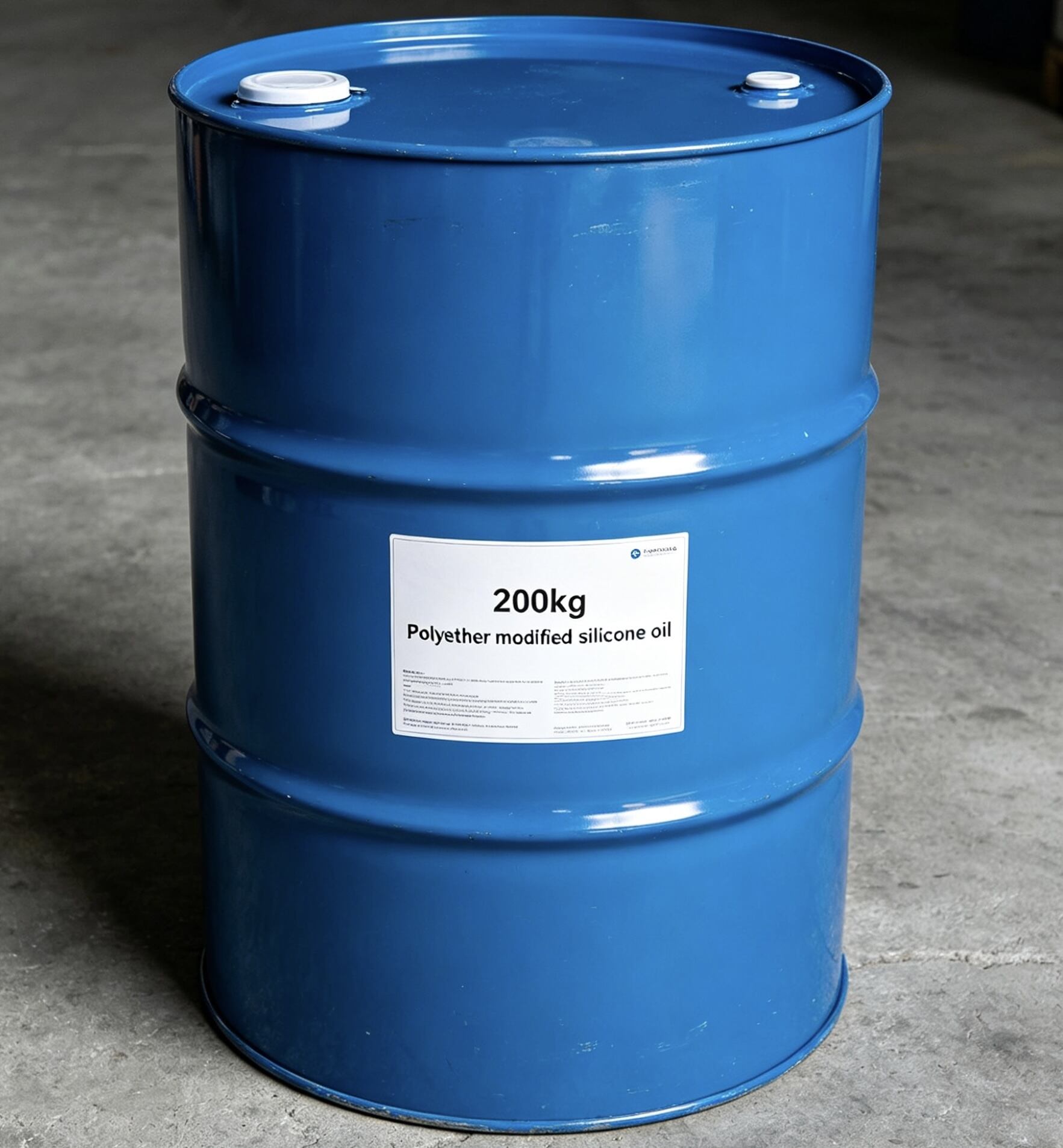
If you have ever opened a drum of polyether modified silicone on a cold morning and noticed that the fluid has turned hazy, milky, or even semi-opaque, you are not alone. Low-temperature clouding is one of the most frequently reported handling issues among formulators, blenders, and end users who work with this class of specialty silicone surfactants. While the appearance can be alarming, understanding the chemistry behind it is the first step toward knowing whether your product is still fit for use — or whether a real quality problem has occurred.
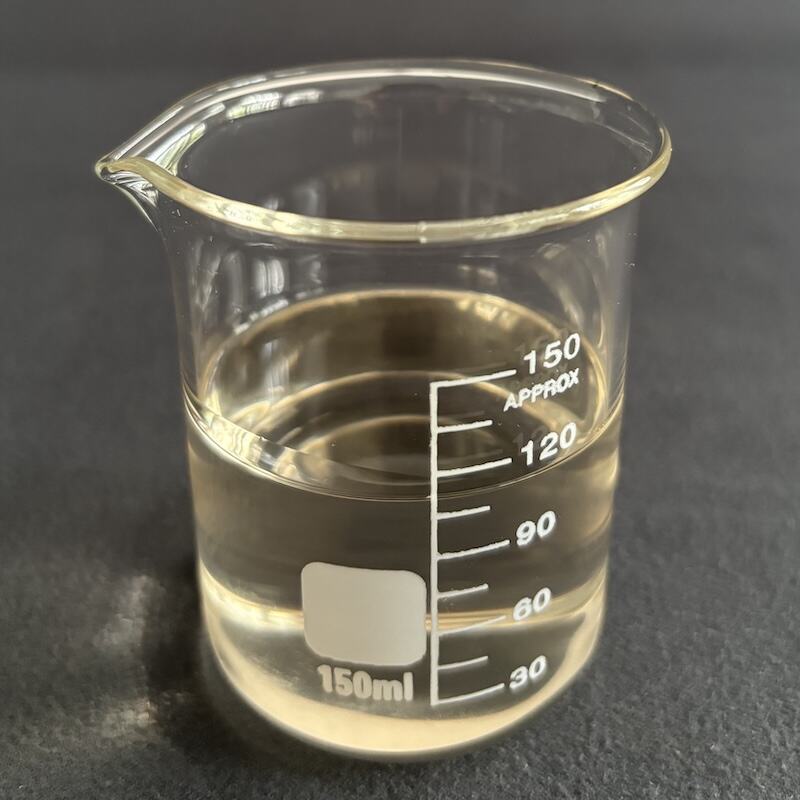
Polyether modified silicone fluids are inherently complex molecules. They combine a polydimethylsiloxane backbone with polyether side chains — typically polyethylene oxide (PEO), polypropylene oxide (PPO), or a combination of both. This structural duality gives the material its remarkable interfacial activity, but it also introduces a thermal sensitivity that directly explains why clouding appears when temperatures drop. This article examines the root causes, the factors that make some grades more susceptible than others, and the practical steps formulators can take to address or prevent the problem.
The Chemistry Behind Low-Temperature Clouding
Cloud Point: The Core Mechanism
The single most important concept for understanding this behavior is the cloud point. Unlike most surfactants, polyether chains — particularly those rich in ethylene oxide (EO) — exhibit what chemists call inverse solubility. Their interaction with water becomes weaker as temperature decreases. Below a certain threshold temperature, the polyether segments of the polyether modified silicone molecule can lose sufficient solvation energy, causing the molecules to associate and form microscopic aggregates or phase-separate from the surrounding medium.
When millions of these aggregates form simultaneously within a transparent fluid, they scatter visible light, producing the characteristic cloudy or milky appearance you observe. This is not decomposition, contamination, or irreversible chemical change in most cases — it is a thermodynamic equilibrium event. The cloud point of a given polyether modified silicone grade is a defined physical property, and understanding where that threshold lies is essential for anyone storing, handling, or formulating with these materials.
It is worth noting that the cloud point phenomenon is more commonly associated with EO-rich polyether chains. PPO-rich grades behave somewhat differently and may exhibit turbidity through a distinct mechanism related to crystallization rather than phase separation. Both cases, however, produce visually similar results at low temperatures.
Molecular Structure and Its Role in Susceptibility
Not all grades of polyether modified silicone cloud at the same temperature. The balance between EO and PO content in the polyether side chain is the single largest determinant. A grade with a high EO-to-PO ratio will have a higher cloud point and will therefore start to cloud at comparatively higher temperatures. Conversely, grades with greater PPO content tend to be more hydrophobic and may remain clear to much lower temperatures before turbidity develops.
Molecular weight also plays a role. Longer polyether chains have a greater tendency to associate at low temperatures simply because there is more chain length available for intermolecular interaction. Similarly, the molecular weight of the silicone backbone influences the overall amphiphilic balance of the molecule, which in turn shifts the thermal stability window. When you are selecting a polyether modified silicone for a specific application, asking for the cloud point specification of that particular grade is not merely a formality — it is practical due diligence.
Environmental and Storage Conditions That Amplify the Problem
Warehouse Temperature Fluctuations
In industrial supply chains, polyether modified silicone is routinely stored in warehouses, distribution hubs, or on loading docks where temperatures fluctuate significantly between seasons and even within a single day. A product that was perfectly clear when it left the manufacturing facility may arrive at a destination cloudy simply because it spent time in a refrigerated container or on a cold dock. Seasonal storage is particularly risky in temperate and cold climates, where winter temperatures can easily drop below the cloud point of common commercial grades.
The problem becomes compounded when drums or totes are partially emptied and then resealed. The headspace inside the container introduces air, and if that air contains moisture, there is a greater chance of localized phase behavior affecting the visible clarity of the remaining fluid. Proper container management — including minimizing unnecessary opening and resealing cycles in cold environments — is a straightforward mitigation step.
Moisture Interaction and Contamination Risk
While the cloud point mechanism is fundamentally a property of the pure polyether modified silicone molecule itself, moisture ingress can shift the effective cloud point and worsen clouding behavior. Water molecules interact with the EO segments of the polyether chain, and when a fluid absorbs trace moisture from humid air during storage or handling, the apparent cloud point of the system can shift upward — meaning it clouds at higher temperatures than the pure specification would suggest.
This is especially relevant in humid climates or in facilities where drums are left open during formulation. A polyether modified silicone that tests clear at 10°C under dry conditions may show visible cloudiness at 15°C after absorbing just a small amount of atmospheric moisture. Tight container management and desiccant storage protocols are therefore valuable preventive measures.
Contamination with other surfactants or co-solvents can also alter the effective cloud point. If the polyether modified silicone is used in a blend and trace amounts of incompatible materials enter the drum, the thermal stability window may shift unpredictably. Segregating storage containers and using dedicated transfer lines minimizes this risk.
Is the Product Still Usable After Clouding?
Reversibility: The Key Question
The most important practical question for any formulator confronting cloudy polyether modified silicone is whether the product is still functionally intact. In the vast majority of cases involving pure low-temperature cloud point behavior, the answer is yes — the product is reversible. Warming the fluid above its cloud point, with gentle agitation if necessary, will cause the aggregates to dissipate and the fluid to return to its characteristic clarity. No chemical breakdown has occurred, and the functional properties — surface tension reduction, spreading, foam control — remain unaltered.
The practical protocol is straightforward: bring the polyether modified silicone to room temperature or slightly above in a controlled environment, allow adequate time for thermal equilibration, and mix gently. For drum quantities, this may take several hours. Forced heating beyond recommended temperatures should be avoided, as sustained elevated temperatures can cause actual oxidative degradation of the polyether segments over time — a genuinely irreversible change that does affect product performance.
When Clouding May Indicate a Real Problem
There are circumstances where persistent cloudiness after warming is a warning sign that something other than the standard cloud point mechanism is at play. If the fluid remains cloudy at temperatures well above the grade's documented cloud point, contamination, moisture absorption beyond a recoverable threshold, or actual hydrolytic degradation of the siloxane backbone may be the cause. Hydrolysis is accelerated in the presence of strong acids or bases, and if a polyether modified silicone has been exposed to such conditions during storage or use, the resulting turbidity may not be reversible.
Visual inspection alone is insufficient to distinguish between reversible cloud point behavior and irreversible degradation. If warming and mixing do not restore clarity within a reasonable timeframe, sending a sample for analytical testing — including viscosity comparison against fresh reference material and infrared spectroscopy if available — is the responsible course of action. Reputable suppliers of polyether modified silicone can typically provide technical guidance on interpreting these results.
Selecting the Right Grade to Minimize Clouding Risk
Matching Cloud Point to Application Temperature Windows
The most effective long-term solution to low-temperature clouding is grade selection aligned with realistic storage and use temperatures. When specifying a polyether modified silicone for applications involving cold climates, outdoor exposure, or refrigerated systems, the cloud point of the grade should be significantly below the lowest expected ambient temperature. Specifying a fluid with a cloud point of 5°C for a product that will be stored in a warehouse that can reach 2°C overnight is a predictable failure.
Ask suppliers for cloud point data presented at multiple concentrations, not just at pure fluid level, because diluted systems can behave differently from concentrated ones. In aqueous formulations, the effective cloud point of the polyether modified silicone in the final system may differ from the neat fluid specification. Conducting simple bench-scale cooling tests using your actual formulation at realistic use concentrations is inexpensive and provides directly actionable data.
Structural Modifications That Reduce Clouding Tendency
Formulators who require broader thermal stability from their polyether modified silicone can consider grades where the polyether chain composition has been shifted toward higher PPO content. Because propylene oxide units introduce steric bulk and reduce the hydrogen-bonding capacity of the chain, PPO-rich grades typically retain clarity to lower temperatures than EO-rich counterparts. The trade-off is that higher PPO content also reduces water dispersibility, which may be a concern for certain aqueous systems.
Another approach involves selecting grades with shorter average polyether chain lengths, which reduces the intermolecular association tendency at low temperatures. However, chain length also affects foam control efficiency, spreading rate, and compatibility with various base systems. The selection of the optimal polyether modified silicone structure is always a balance of competing performance requirements, and no single structural modification solves all problems simultaneously.
For critical applications where clarity must be maintained across a wide temperature range — such as cosmetic formulations, optical coatings, or precision agricultural adjuvants — blending a polyether modified silicone with co-solvents such as short-chain alcohols or glycols can depress the effective cloud point of the system. This approach requires careful compatibility testing but is well established in practice.
Handling and Process Adjustments to Prevent Clouding Issues
Storage Protocol Optimization
Even when the correct grade of polyether modified silicone has been specified, poor storage practices can lead to unnecessary handling problems. Drums and IBC totes should be stored in temperature-controlled environments where the minimum temperature does not approach or fall below the product's cloud point. In facilities without climate control, insulating drum jackets or heated storage rooms are cost-effective investments compared to the disruption caused by clouded product delays on production lines.
Inventory rotation is equally important. Older stock of polyether modified silicone that has been through multiple temperature cycling events — even if each individual event was sub-threshold — may show slightly altered behavior over time due to cumulative trace moisture absorption. First-in, first-out (FIFO) inventory management minimizes this risk and aligns with standard chemical handling best practices.
Conditioning Procedures Before Use
When cold product must be used promptly, a structured warm-up and conditioning procedure reduces the risk of introducing turbid polyether modified silicone into a sensitive formulation. Bringing containers to 25–35°C in a controlled warm room or heated cabinet for at least four to six hours before use — followed by gentle rolling or paddle mixing — reliably restores clarity in thermally clouded product. This step adds time to the workflow but is far less disruptive than troubleshooting formulation failures caused by partially phase-separated additive.
Documenting conditioning procedures and incorporating them into standard operating procedures (SOPs) also helps quality assurance teams distinguish between routine cold-weather handling events and genuine product non-conformance situations. When operators know that incoming product may appear cloudy in winter and that warming restores it, they are less likely to mistakenly reject acceptable material or, conversely, overlook a genuine quality issue.
FAQ
Does clouding at low temperatures mean the polyether modified silicone has expired or gone bad?
Not necessarily. In most cases, low-temperature clouding in polyether modified silicone is a reversible physical phenomenon driven by the cloud point behavior of the polyether segments. Warming the fluid above its cloud point and mixing gently will restore clarity without any loss of functional performance. However, if the fluid remains cloudy after being brought to normal use temperatures, it should be tested further as genuine degradation or contamination cannot be ruled out without analysis.
How do I find out the cloud point of the polyether modified silicone grade I am using?
Cloud point is a defined physical property that should be listed in the product's technical data sheet (TDS) or can be requested from the supplier. Note that cloud point data may be provided for neat fluid or for a standard dilution, and behavior in your specific formulation may differ. Conducting small-scale cooling tests in your actual system is recommended for critical applications where thermal clarity is important.
Can I prevent clouding by storing polyether modified silicone in a different type of container?
Container type alone will not prevent the cloud point phenomenon, as it is intrinsic to the chemistry of polyether modified silicone. However, certain container features — such as improved insulation or integrated heating elements on IBC totes — can maintain fluid temperature above the cloud point during storage and transport. These solutions address the symptom rather than the root cause, which is grade selection. Choosing a grade with a cloud point well below your storage environment's minimum temperature is the more reliable long-term approach.
Does clouding affect the performance of polyether modified silicone in finished formulations?
If the polyether modified silicone is fully redispersed and clear before incorporation into a formulation, performance is not affected. The clouding event itself does not alter the molecular structure. The risk arises when cloudy — partially phase-separated — material is added directly to a formulation without conditioning, as the distribution of the additive may be uneven, leading to performance inconsistency. Always condition the product to clarity before use in sensitive formulations.
Table of Contents
- The Chemistry Behind Low-Temperature Clouding
- Environmental and Storage Conditions That Amplify the Problem
- Is the Product Still Usable After Clouding?
- Selecting the Right Grade to Minimize Clouding Risk
- Handling and Process Adjustments to Prevent Clouding Issues
-
FAQ
- Does clouding at low temperatures mean the polyether modified silicone has expired or gone bad?
- How do I find out the cloud point of the polyether modified silicone grade I am using?
- Can I prevent clouding by storing polyether modified silicone in a different type of container?
- Does clouding affect the performance of polyether modified silicone in finished formulations?