Advanced Blowing Agent Additive Solutions: Superior Thermal Control and Cost-Effective Lightweight Manufacturing

All Categories

Get a Free Quote

Our representative will contact you soon.
Email
Name
Company Name
Whatsapp
Message
0/1000

blowing agent additive

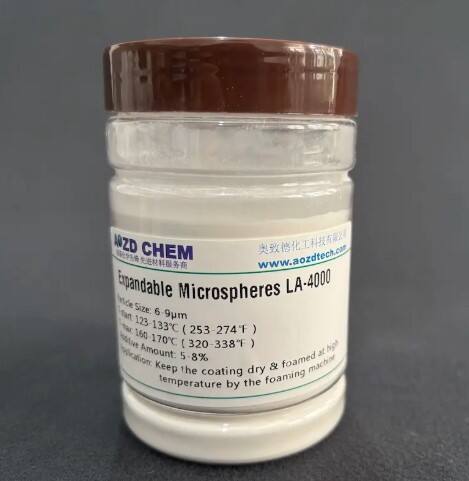
Blowing agent additive represents a revolutionary chemical compound designed to create controlled cellular structures within various materials during manufacturing processes. This specialized additive functions by generating gas bubbles when exposed to specific temperature conditions, effectively reducing material density while maintaining structural integrity. The blowing agent additive operates through precise chemical reactions that produce nitrogen, carbon dioxide, or other inert gases at predetermined activation temperatures. Modern formulations incorporate advanced stabilizers and decomposition catalysts that ensure consistent bubble formation and uniform cell distribution throughout the host material. The technological sophistication of blowing agent additive lies in its ability to create predictable foam structures with controlled cell sizes ranging from micro to macro levels. Manufacturing industries utilize this additive across diverse applications including plastic foam production, rubber expansion, textile processing, and composite material enhancement. The chemical composition typically includes endothermic or exothermic compounds that respond to thermal activation, creating expanding forces that transform solid materials into lightweight cellular structures. Quality blowing agent additive formulations provide excellent thermal stability, ensuring reliable performance across varying processing conditions. The activation temperature range can be precisely engineered to match specific manufacturing requirements, allowing for seamless integration into existing production lines. Advanced blowing agent additive systems offer superior gas yield efficiency, maximizing expansion ratios while minimizing material consumption. The particle size distribution is carefully controlled to ensure optimal dispersion within host materials, preventing agglomeration and ensuring uniform cellular development. Environmental considerations drive the development of eco-friendly blowing agent additive formulations that eliminate harmful emissions while maintaining superior performance characteristics. The versatility of blowing agent additive extends to multiple polymer systems including polyolefins, polystyrenes, polyurethanes, and specialty engineering plastics, making it an indispensable component in modern manufacturing processes.

Popular Products

Blowing agent additive delivers exceptional cost reduction benefits by significantly decreasing raw material consumption while maintaining product performance standards. Manufacturers experience substantial savings when this additive reduces material density by 20 to 60 percent, directly translating into lower production costs and improved profit margins. The lightweight properties achieved through blowing agent additive implementation provide tremendous shipping and handling advantages, reducing transportation expenses and simplifying logistics operations. Processing efficiency improvements become immediately apparent when incorporating blowing agent additive into manufacturing workflows, as the expanded materials require less energy for molding and shaping operations. The enhanced insulation properties created by cellular structures make products more energy-efficient, providing end-users with superior thermal performance and reduced energy consumption. Blowing agent additive enables manufacturers to create products with improved shock absorption capabilities, making them ideal for protective packaging and safety applications. The dimensional stability offered by properly formulated blowing agent additive ensures consistent product quality and reduces waste from dimensional variations during production cycles. Installation and assembly processes become significantly easier when using products containing blowing agent additive due to their reduced weight and improved handling characteristics. The acoustic dampening properties achieved through controlled cellular structures provide additional value for noise reduction applications in automotive and construction industries. Manufacturing flexibility increases dramatically with blowing agent additive integration, allowing for rapid adjustments to density levels and cellular structures without major equipment modifications. Quality control becomes more predictable when using advanced blowing agent additive formulations, as consistent activation temperatures and gas generation rates ensure reproducible results across production batches. The environmental benefits extend beyond reduced material consumption, as lighter products contribute to lower carbon footprints throughout their entire lifecycle. Durability improvements often accompany proper blowing agent additive usage, as the cellular structure can enhance crack resistance and impact tolerance in finished products. Processing temperature requirements frequently decrease when using blowing agent additive, resulting in energy savings and reduced thermal stress on manufacturing equipment. The competitive advantages gained through blowing agent additive adoption include faster production cycles, improved product differentiation, and enhanced market positioning through innovative lightweight solutions.

Latest News

Unlocking Potential: The Power of Additives in Modern Manufacturing

26

Nov

Unlocking Potential: The Power of Additives in Modern Manufacturing

Understanding Additives in Modern Manufacturing Additives play a vital role in modern manufacturing processes across various industries. They're basically substances mixed into materials to boost performance in ways the base material just can't do o...
View More
Unlocking Versatility: The Power of Silicone Emulsions in Industry

26

Nov

Unlocking Versatility: The Power of Silicone Emulsions in Industry

Understanding Silicone Emulsions Silicone emulsions basically consist of silicone polymers blended with water, making them pretty important across many different industries. We find these emulsions everywhere really, in everything from makeup produc...
View More
The Benefits of Using a Compact Leather Feel Modifier Solution

26

Nov

The Benefits of Using a Compact Leather Feel Modifier Solution

Why Use Compact Leather Feel Modifier Solutions Leather feel modifiers in compact form really make a difference when it comes to how leather products feel against the skin. These little treatments help create that rich, soft sensation people associa...
View More
How Do Expancel Microspheres Improve Surface Texture

02

Dec

How Do Expancel Microspheres Improve Surface Texture

Surface texture plays a crucial role in determining the performance, aesthetics, and functionality of countless industrial products. From automotive coatings to consumer electronics, the ability to achieve precise surface characteristics can make the...
View More

Get a Free Quote

Our representative will contact you soon.
Email
Name
Company Name
Whatsapp
Message
0/1000

blowing agent additive

Superior Thermal Activation Control Technology

Superior Thermal Activation Control Technology

The advanced thermal activation control technology incorporated in modern blowing agent additive systems represents a breakthrough in precision manufacturing capabilities. This sophisticated technology allows manufacturers to achieve exact activation temperatures ranging from 120°C to 250°C, providing unprecedented control over the foaming process timing and intensity. The precision-engineered decomposition kinetics ensure that gas generation occurs at the optimal moment during processing, preventing premature activation that could compromise product quality or delayed activation that might result in incomplete expansion. This thermal control technology utilizes proprietary catalyst systems that respond predictably to temperature changes, creating consistent and repeatable foaming characteristics across different production runs. The activation temperature stability remains constant even under varying atmospheric conditions, humidity levels, and processing speeds, ensuring reliable performance regardless of environmental factors. Advanced blowing agent additive formulations incorporate multi-stage activation profiles that can create complex cellular structures with varying density gradients throughout the material thickness. This technology enables manufacturers to optimize material properties for specific applications, such as creating denser skin layers for improved surface finish while maintaining lightweight core structures. The thermal activation control system prevents thermal runaway reactions that could lead to excessive expansion or material degradation, protecting both product quality and processing equipment. Temperature-sensitive stabilizers work in conjunction with the activation system to maintain consistent gas generation rates, preventing bubble coalescence that could create undesirable large voids or weak spots in the final product. The precision of this thermal control technology allows for integration with automated manufacturing systems, enabling real-time adjustments to processing parameters based on temperature feedback. Quality assurance becomes more reliable when utilizing this advanced thermal activation control, as the predictable nature of gas generation eliminates variables that traditionally caused production inconsistencies. The energy efficiency of manufacturing processes improves significantly due to the precise temperature control requirements, reducing overall thermal input while achieving superior expansion results.
Enhanced Material Performance and Durability

Enhanced Material Performance and Durability

Blowing agent additive significantly enhances material performance characteristics while simultaneously improving long-term durability across various applications and environmental conditions. The cellular structure created by quality blowing agent additive provides superior impact resistance compared to solid materials of equivalent weight, making products more resilient against mechanical stress and accidental damage. This enhanced durability stems from the energy absorption capabilities of the cellular matrix, which distributes impact forces across multiple cell walls rather than concentrating stress in localized areas. The improved flexibility achieved through controlled expansion allows materials to withstand repeated flexing and bending without developing fatigue cracks or permanent deformation. Thermal cycling resistance becomes exceptional when properly formulated blowing agent additive creates uniform cellular structures that accommodate thermal expansion and contraction without compromising structural integrity. The enhanced insulation properties provided by trapped gas cells improve temperature stability and reduce thermal stress throughout the material cross-section. Chemical resistance often improves in expanded materials due to reduced material density and altered surface chemistry, providing better protection against environmental degradation and chemical exposure. The dimensional stability of products containing blowing agent additive surpasses that of many solid alternatives, as the cellular structure provides internal support that resists warping, shrinkage, and dimensional creep over time. Moisture resistance characteristics improve significantly due to the reduced material density and modified surface properties, preventing water absorption that could lead to swelling, degradation, or microbial growth. The fatigue life of expanded materials frequently exceeds solid alternatives due to the stress distribution effects of the cellular structure, making them ideal for applications requiring long-term cyclic loading resistance. UV stability can be enhanced through proper blowing agent additive selection and formulation, protecting cellular structures from photodegradation that might compromise material performance. The compressive strength-to-weight ratio achieved through optimal blowing agent additive usage often surpasses solid materials, providing structural efficiency advantages in load-bearing applications. Fire resistance properties may improve in certain formulations due to the thermal barrier effects of cellular structures and the potential for incorporating flame-retardant compounds within the blowing agent additive system.
Exceptional Processing Efficiency and Cost Optimization

Exceptional Processing Efficiency and Cost Optimization

Blowing agent additive delivers remarkable processing efficiency improvements and comprehensive cost optimization benefits that transform manufacturing economics across multiple industries. The injection molding cycle times decrease substantially when using blowing agent additive due to reduced material mass and improved heat transfer characteristics, allowing manufacturers to increase production throughput without additional equipment investments. The lower material consumption achieved through controlled expansion directly reduces raw material costs by 25 to 50 percent while maintaining or improving product performance specifications. Processing energy requirements decline significantly due to the reduced material mass and improved thermal properties of expanded materials, resulting in lower utility costs and improved environmental sustainability metrics. The improved flow characteristics of materials containing blowing agent additive enable processing at lower injection pressures and temperatures, reducing wear on manufacturing equipment and extending machinery service life. Mold filling becomes more uniform and complete when using properly formulated blowing agent additive, reducing defect rates and improving first-pass yield percentages throughout production cycles. The reduced clamping force requirements for expanded materials allow manufacturers to process larger parts on existing equipment or achieve higher cavity counts in multi-cavity molds, maximizing equipment utilization efficiency. Quality control processes become more streamlined due to the consistent performance characteristics of advanced blowing agent additive formulations, reducing inspection time and testing requirements while maintaining high-quality standards. Inventory costs decrease substantially due to the lighter weight of finished products, reducing storage and handling expenses while improving warehouse space utilization efficiency. The simplified demolding process resulting from reduced material shrinkage and improved surface release properties increases production efficiency and reduces part damage during handling operations. Scrap reduction becomes significant when using blowing agent additive due to improved processability and reduced sensitivity to processing parameter variations, minimizing material waste and associated disposal costs. The enhanced productivity achieved through faster processing cycles and improved yield rates provides competitive advantages through reduced unit costs and improved delivery capabilities. Equipment maintenance requirements often decrease due to the gentler processing conditions enabled by blowing agent additive usage, reducing downtime and maintenance expenses while improving overall equipment effectiveness metrics.

Get a Free Quote

Our representative will contact you soon.
Email
Name
Company Name
Whatsapp
Message
0/1000